“D Day”, (or “J Jour” as it’s known in France) when the Allies opened the Second Front in 1944 and the largest military operation in history, has been documented in countless books, treatises and films, including such epics as ‘The Longest Day’ and ‘Saving Private Ryan’. It’d be pointless me trying to recount the sequence of events which occurred in early June 1944, as so much scholarship and popular culture is far more informative than anything I as an amateur could commit to this page.
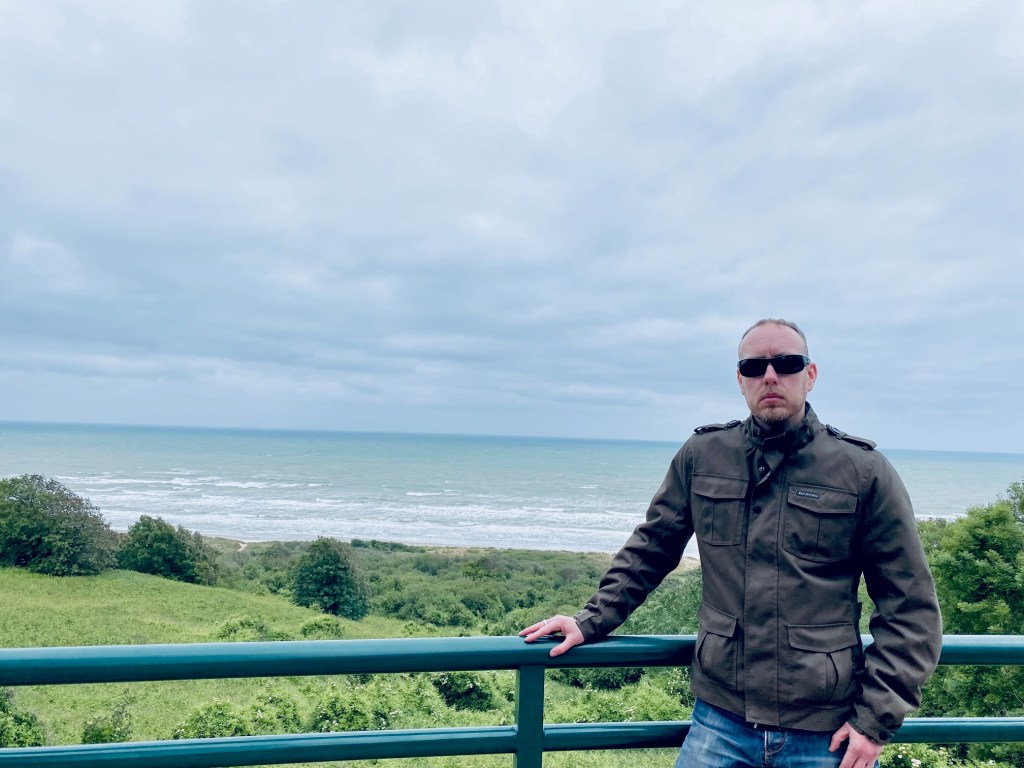
However, since it may be useful for folks to know the breadth of the highlights one might find oneself visiting in Normandy, there are the obvious points of reference. The allies succeed in deceiving the Germans into believing that they would attack their fortifications at Calais from Kent, going as far as to create an entire fake army (canvas tanks and similar deceptions) supposedly commanded by Field Marshal Montgomery in Kent. In reality five Normandy beaches were selected by the Allies as landing points instead: those codenamed “Omaha” and “Utah” received US troops, British forces took ” Sword” and “Gold” beaches, so codenamed after fish, and the Canadians landed on “Juno” beach. The most intense fighting occurred at Omaha Beach, it was the best defended and the US troops landing there suffered the most setbacks. Other beaches saw less violence but there were a number of flashpoints which were fairly extreme.
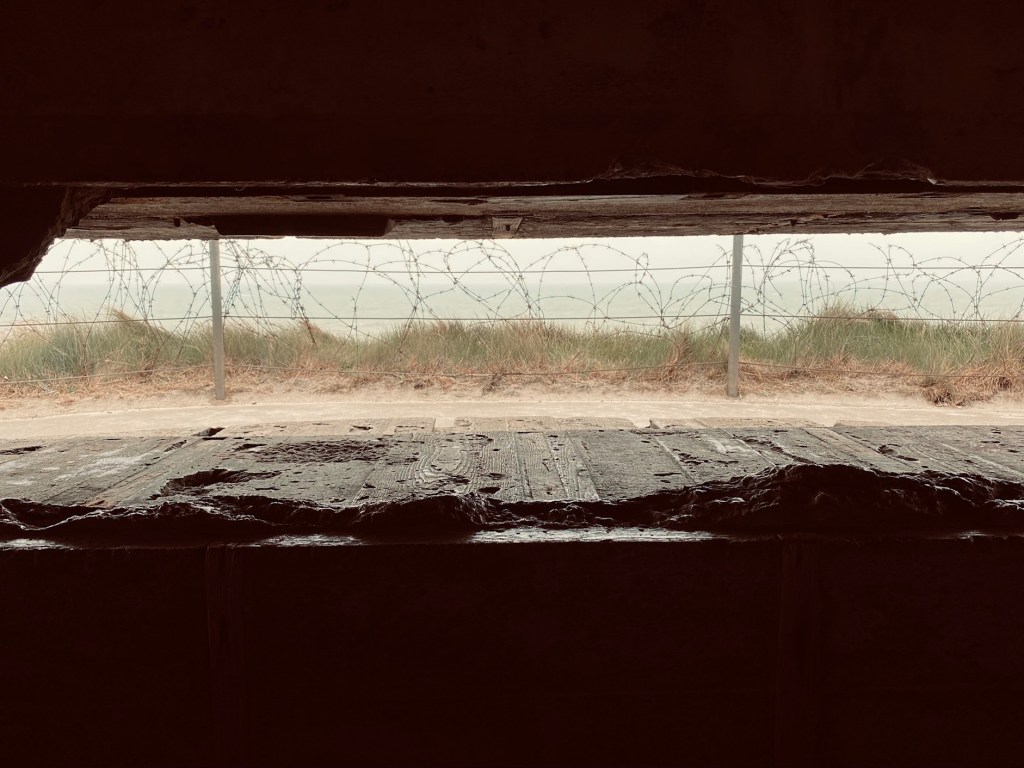
There are other sites. Pegasus Bridge was an important road crossing over the Caen Canal which had to be secured by American and British Forces and is a major landmark during the commemorations on 6 June itself. Nearby is the famous Cafe Gondree, which to this day is run by Madame Gondree who was a child during D Day. The cafe was one of the first buildings to be liberated, and the Gondree family assisted the Allies during the difficult days of June 1944.Sainte-Mere-Eglise is famous for the church upon whose spire an unfortunate paratrooper got entangled, and the small town of Sainte-Marie-du-Mont saw protracted street fighting, with the church changing hands several times during the night.
Dead Man’s Corner, a key site during Mission Albany (the Airborne descent) houses an impressive technology museum with tanks, cars, planes, motorcycles, boats and all sorts of other pieces of kit operated by the various armies involved in Operation Overlord, the overall name of the entire D Day battle. The Merville Battery was an example of otherwise demoralised and weakened German troops holding out for multiple weeks at a location housing some artillery and withstanding multiple Allied assaults well beyond D Day itself. The 360 Degree Cinema at Arromanches offers a simulation of the battle.
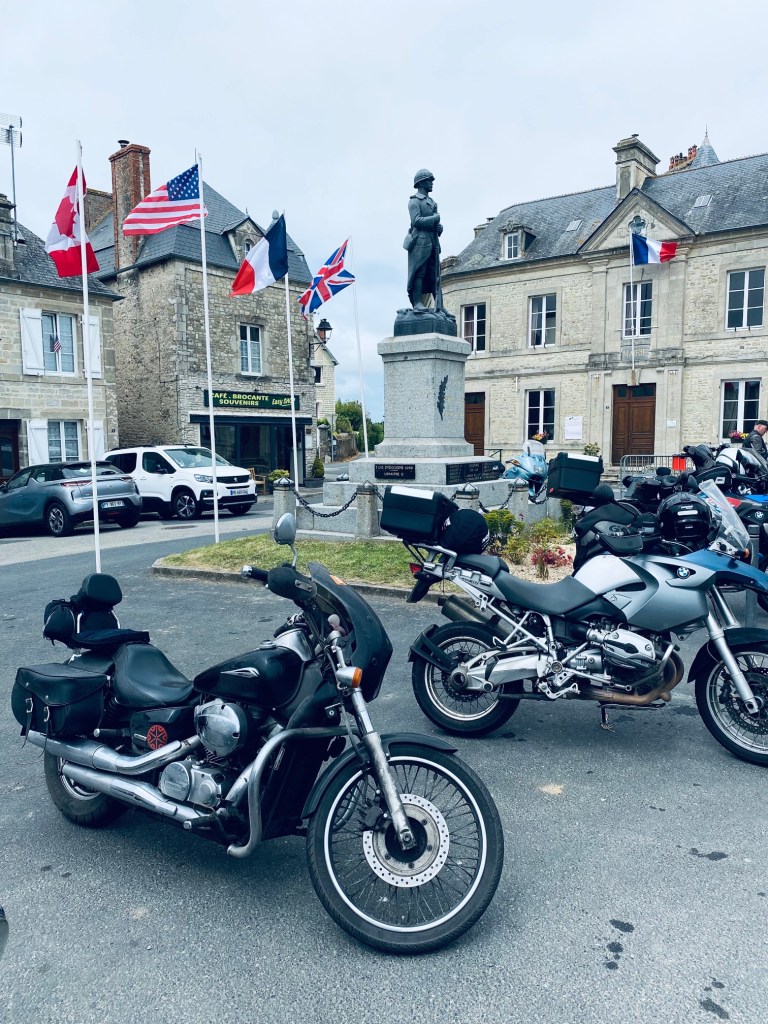
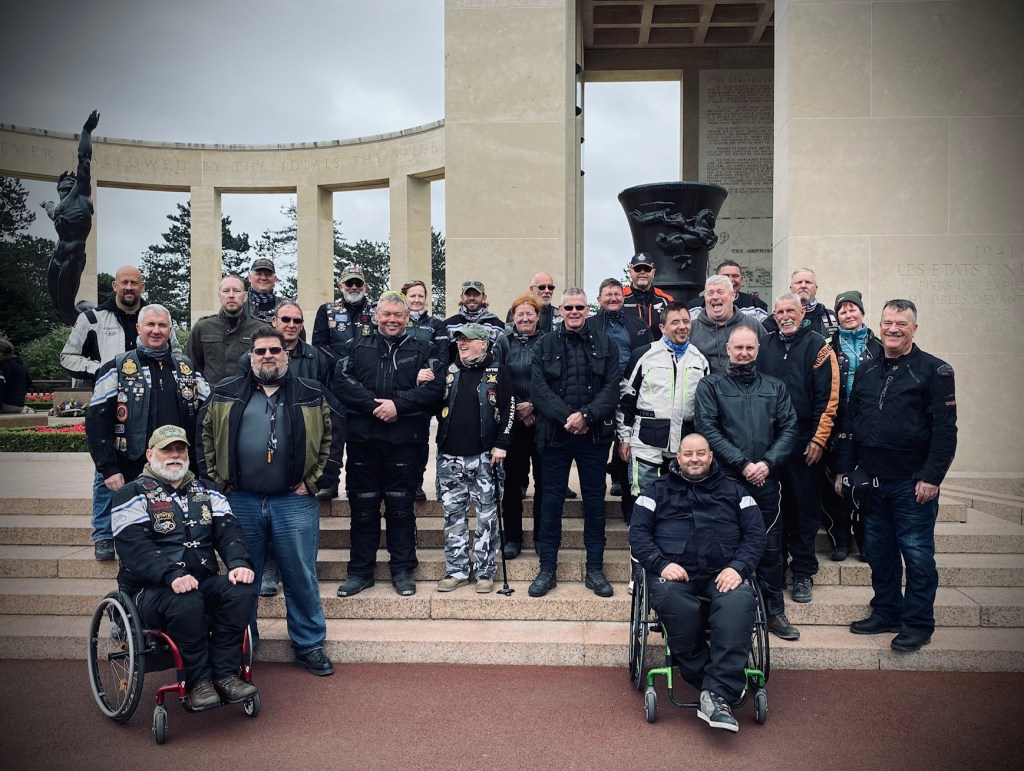
There are several cemeteries. The American one houses the graves of the thousands killed during the D Day landings and elsewhere in Normandy. The British one is more localised to the specific set of events and there are others, administered by the Commonwealth War Graves Commission. The German one contains over 20,000 dead buried four deep in a small space. French authorities have allocated a space for a Holocaust memorial directly opposite the German one.
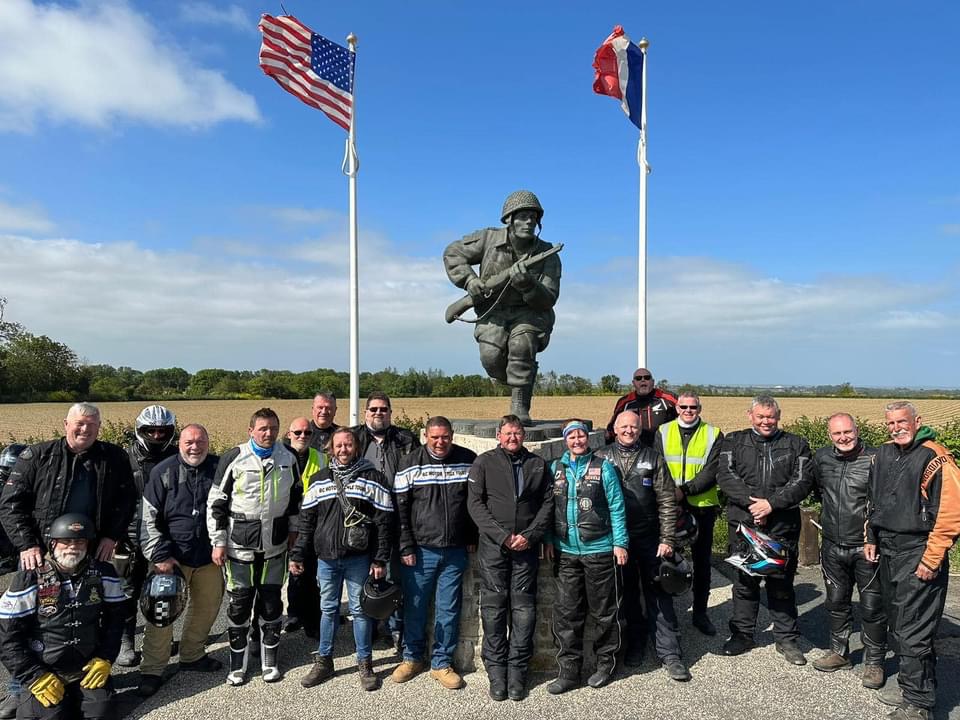
The week with Paul riding pillion is spent visiting these landmarks. We look at the museums and the sites of the battles. Due to his PTSD he opts to stay out of the simulators. I stay with him. We spend a lot of time drinking coffee and talking, about a lot of things. We discussed Paul’s trauma, his history of addiction and how he overcame it, his dogs, his recent sporting achievements including competing in the Veteran Games in Israel, the book which he is riding and our mutual love of Iron Maiden.
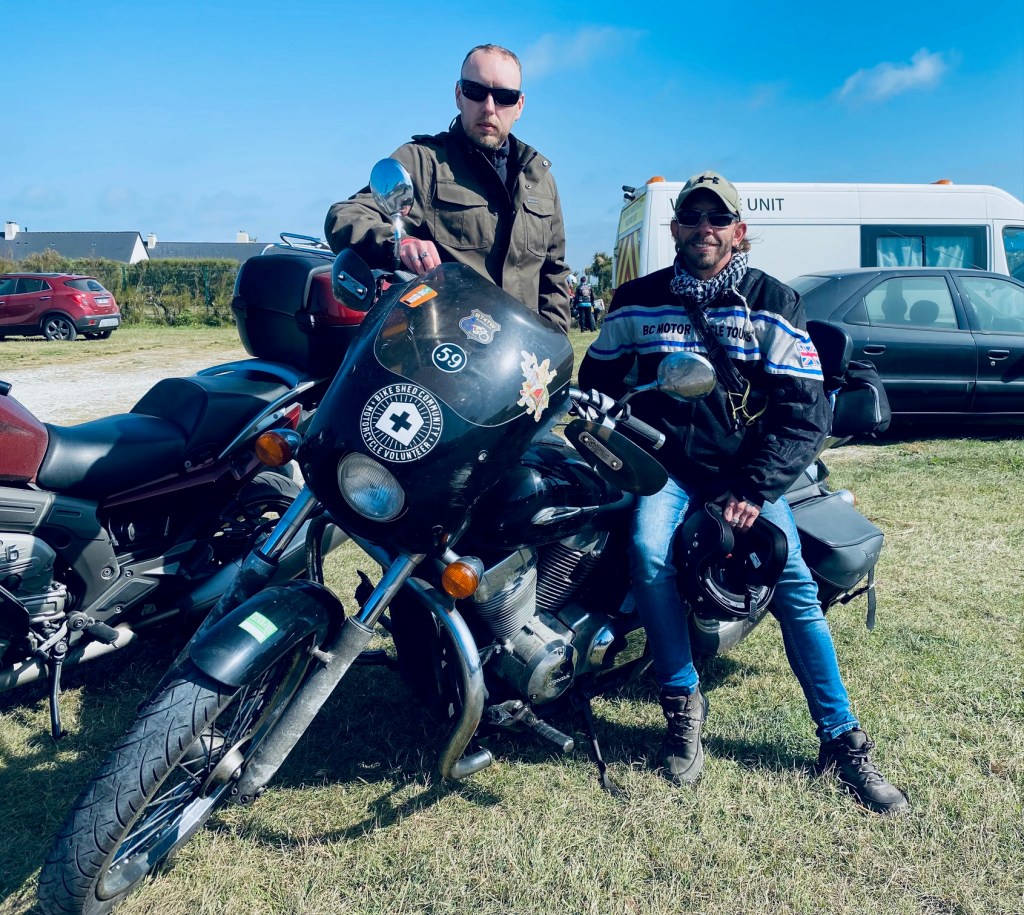
It’s the love of rock music which leads to a comedic incident later in the week. Paul comes up with a good suggestion: that we have some music when we ride. I get my small Tribit waterproof speaker and we experiment with it in various positions on the bike. In the end we decide that for us both to hear it, it’s best to attach it to the strap from Paul’s bag across his chest. This works well. We put together a playlist of a few dozen tunes: Maiden of course, but also Sabbath, Deep Purple and others. It’s Sabbath which gets us into trouble. We ride around quite happily with the tunes playing. Once we arrive somewhere, it takes a few moments to take the gloves off and switch the music off. On one occasion we arrive at a war cemetery, and as the engines are switched off we both realise that the song that’s playing is ‘Children of the Grave’ by Sabbath, in the relative quiet of the car park. We scrabble to switch it off. Sure it may seem funny in retrospect, but at the time those five or six seconds are mortifying.
There are other moments of inconvenience and levity. On the day we visit the 360 Degree cinema, which Paul and I sit out with a coffee, we go to the town of Arromanche beforehand. Our group rides to the waterfront to park, only to be intercepted by a cop who waves at us and tells us that we can’t park there. “Le maire déteste les motos. C’est un con”, he explains with a Gallic shrug.
I shower in the mornings. One morning in the shower block, I hear a commotion. I emerge from the shower cubicle and find five others, including a cleaner, frantically pulling at the door. It seems we’ve somehow become locked in. The caretaker is unable to open the door from the outside and it looks like we’ll be trapped in there for a while and I’ll miss the day’s riding. Eventually I decide that I am the master of my own fate, climb up the sinks and to the ceiling to the open window, pull myself through it and drop two metres or so to the ground outside, to the cheers of those still stuck inside. I run to my tent, pull on my motorbike gear and join the group with moments to go.
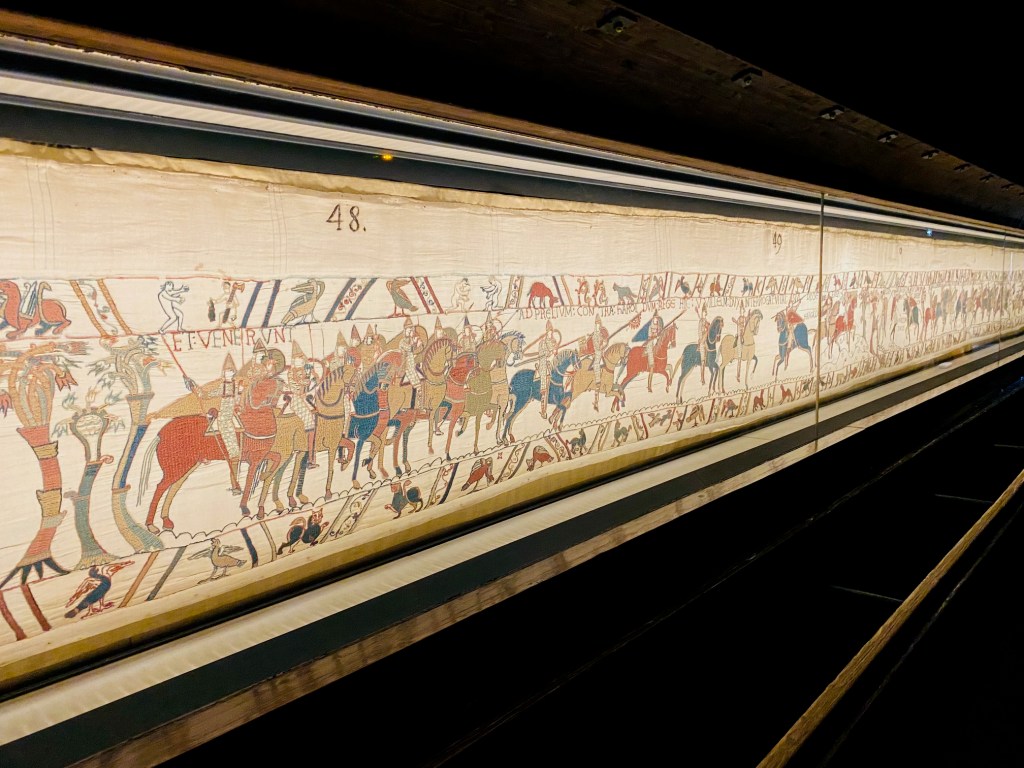
One of the war cemeteries is in Bayeux and I can’t pass up the opportunity to go and see the Bayeux tapestry, the famous embroidered historical record of the Norman conquest of England. I’m joined by one of the veterans, Nikki, who is a descendant of Archbishop Odo, William the Conqueror’s step brother who came over with the invading force in 1066. We split off from the group and head into Bayeux. The tapestry is truly remarkable: 70 metres of dozens of scenes embroidered in incredible detail. We come away with the sense that the Norman conquest was not dissimilar to D Day as a military operation, despite being some 900 years apart, and that William who was also known as William the Bastard, really was a bastard.
The group is bonding more and more. As well as becoming very close with Paul, I spend time with others. One of them is Papa Ron of Arizona, a 73 year old retired US Marine riding a borrowed Royal Enfield. Towards the end of the tour, Ron pulls me aside and presents me with a challenge medal issued by the Arizona chapter of American Legion Riders. He explains that this is something which is bestowed upon people for demonstrating respect and good character. I am truly honoured.
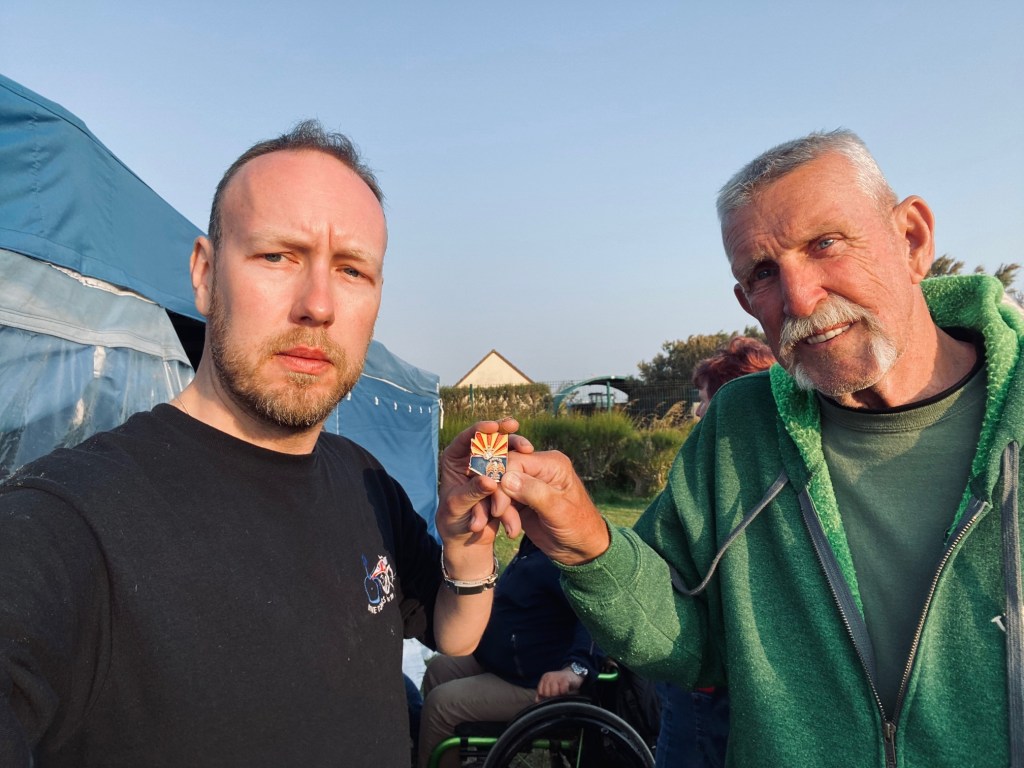
Being there, together with these men and women, getting lost in conversations, at times being overwhelmed by the solemnity of the occasion, at other times laughing together, really drives home for me the importance of the work which Bike Tours for the Wounded do. Many if not all have physical and mental trauma in their past, and these tours, this respite, is such a huge part of addressing and overcoming it. Sometimes the positive change is visible with the naked eye, at other times it’s incremental and may take years, but at both ends of the temporal spectrum it’s undeniable.
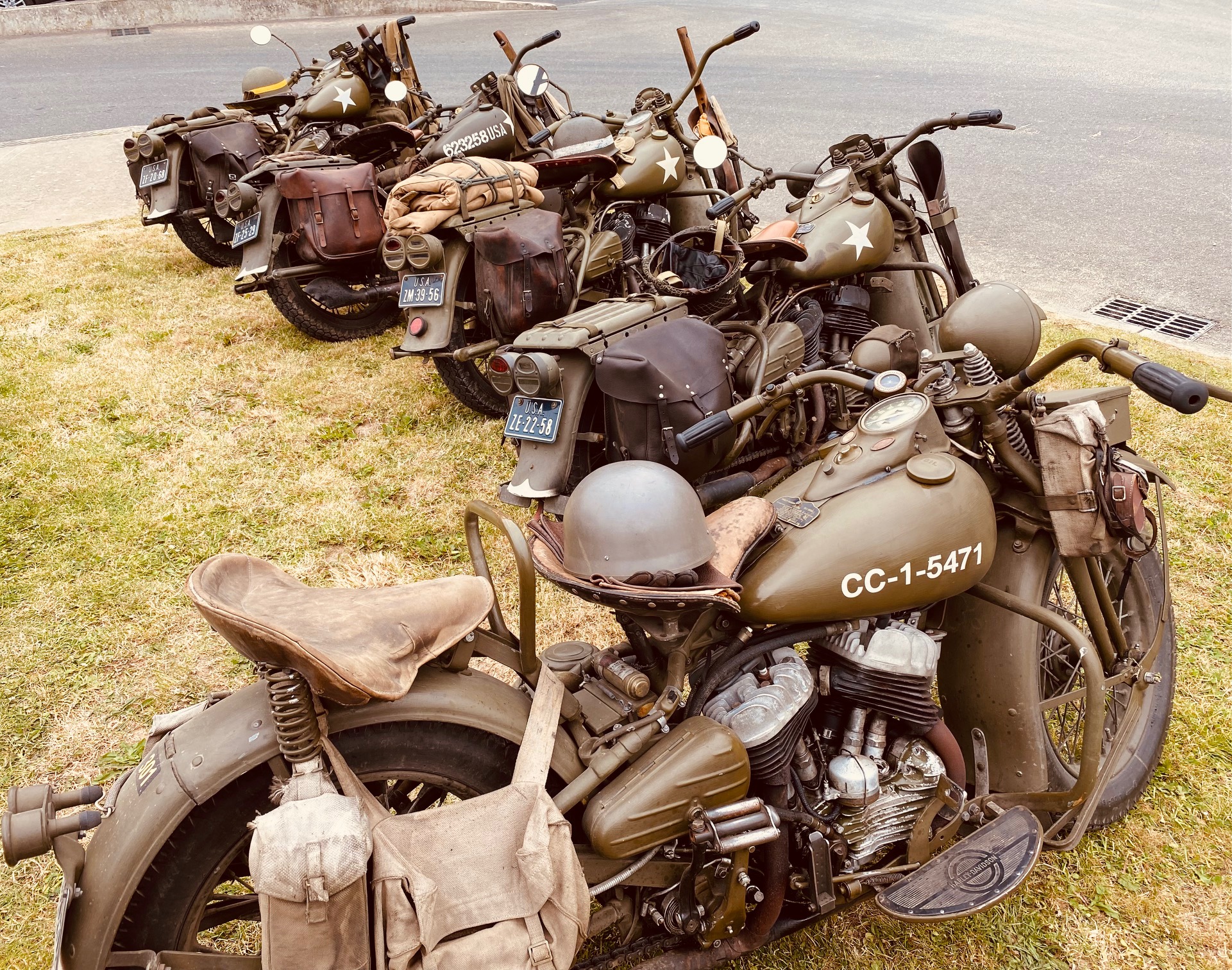
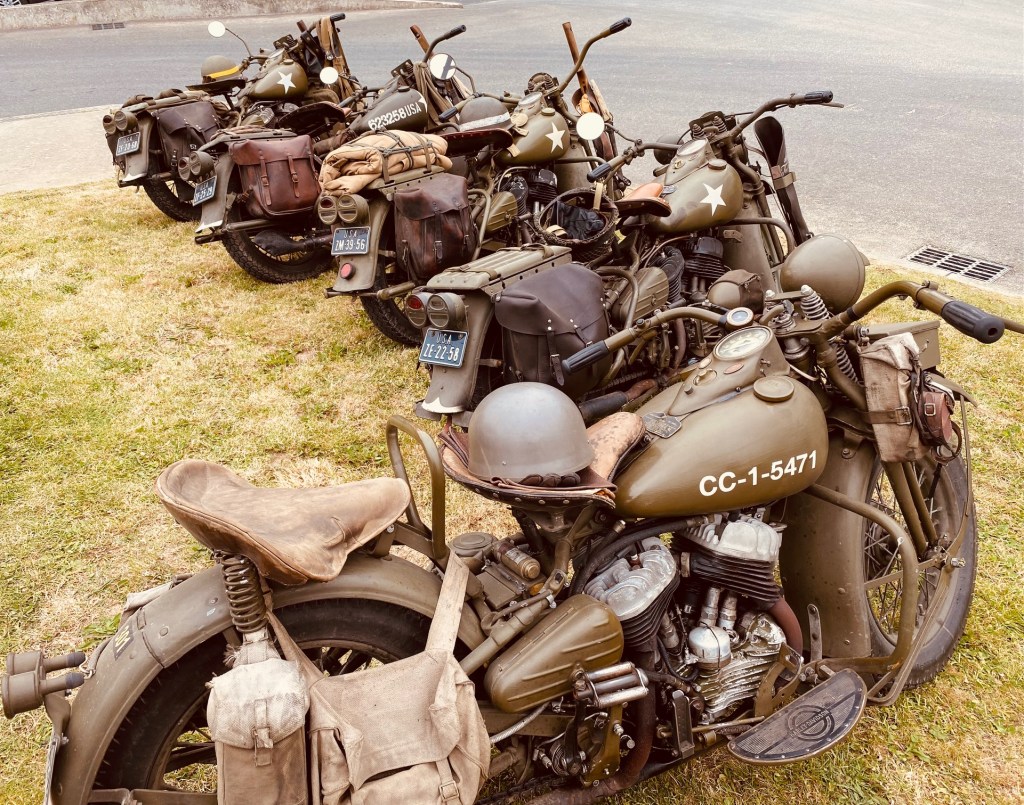
Life, unusual though it is, continues around us. During D Day week Normandy is full of reenactors, along with historic vehicles of all kinds, motorcycles, jeeps, tanks, aeroplanes. All of these vintage machines are in working order. We witness several fly bys and on one occasion get stuck in a traffic jam of tanks.
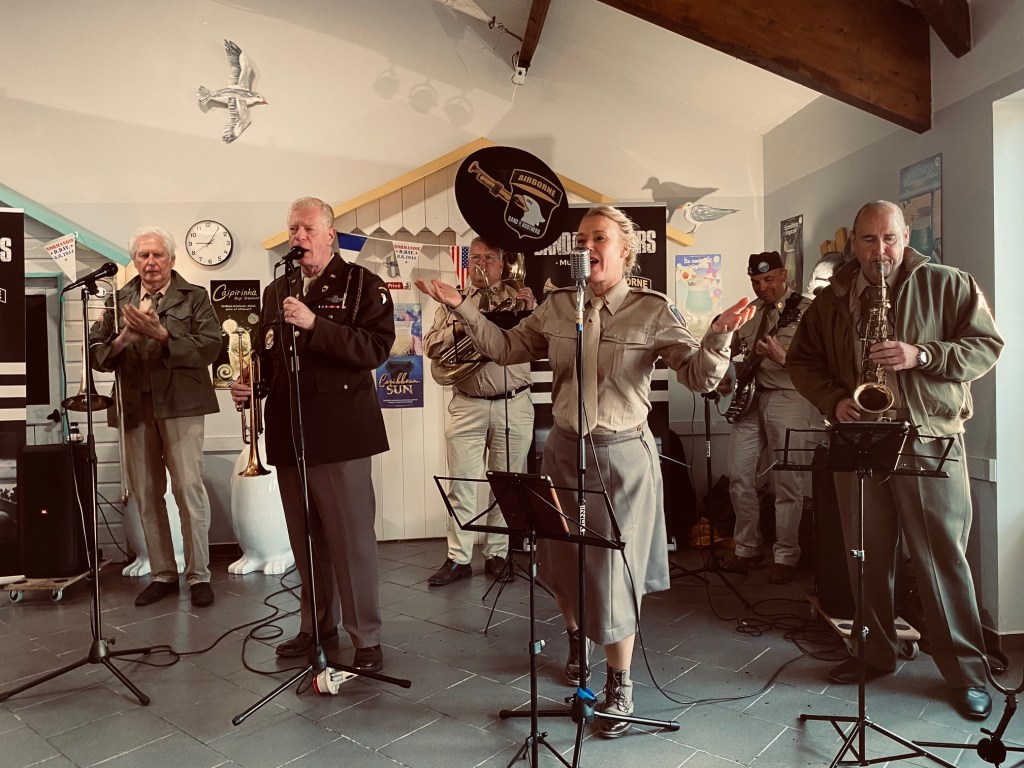
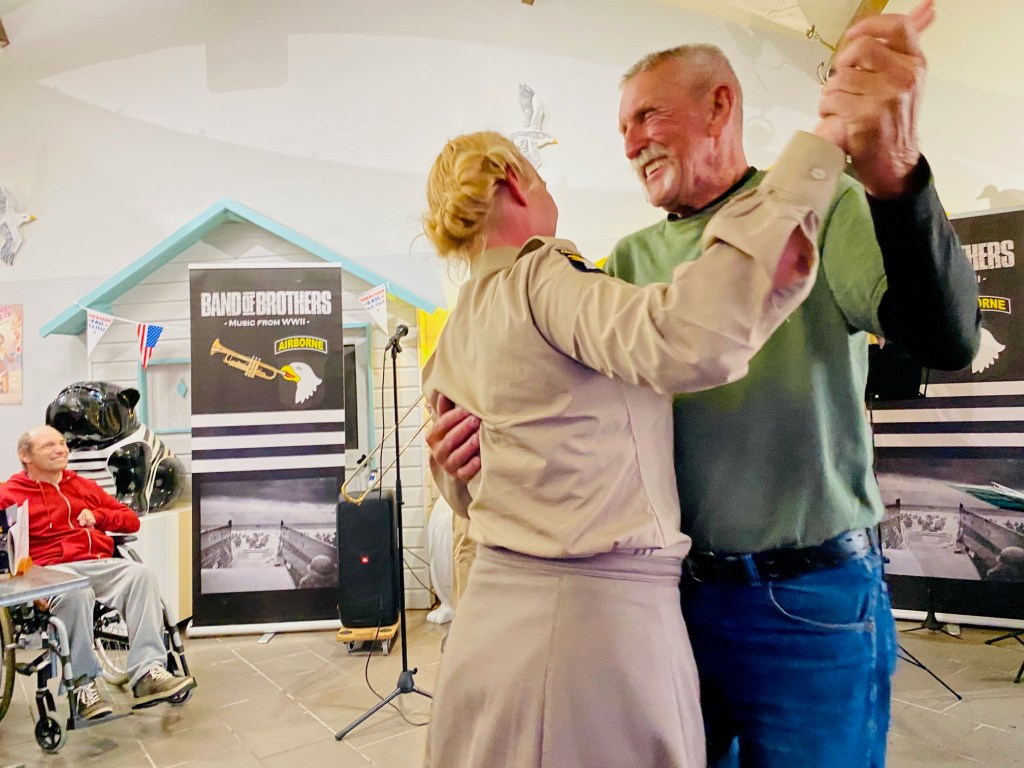
There are also musical reenactors and we enjoy a band performing hits from the 1940s as a similar band would have done 80 years ago. The vibe is as authentic as can be, and Papa Ron even dances with the singer, and it really is a long way to Tipperary.
The wind relents halfway through our time in Normandy, perhaps around Day 4. The riding becomes easier, and sleep comes more readily in the night. All too soon, it’s time to pack up camp, say our goodbyes and head out. Breaking up the camp is easier than setting it up as the wind is less intense. As before it’s a team effort. Eventually all that’s left are marks on the grass where the tents were. I say goodbye to the group and especially to Paul. We hug, I saddle up and begin my long long ride south, with the first stop being Nantes.
 Blac Ridere
3 thoughts on “D Week”