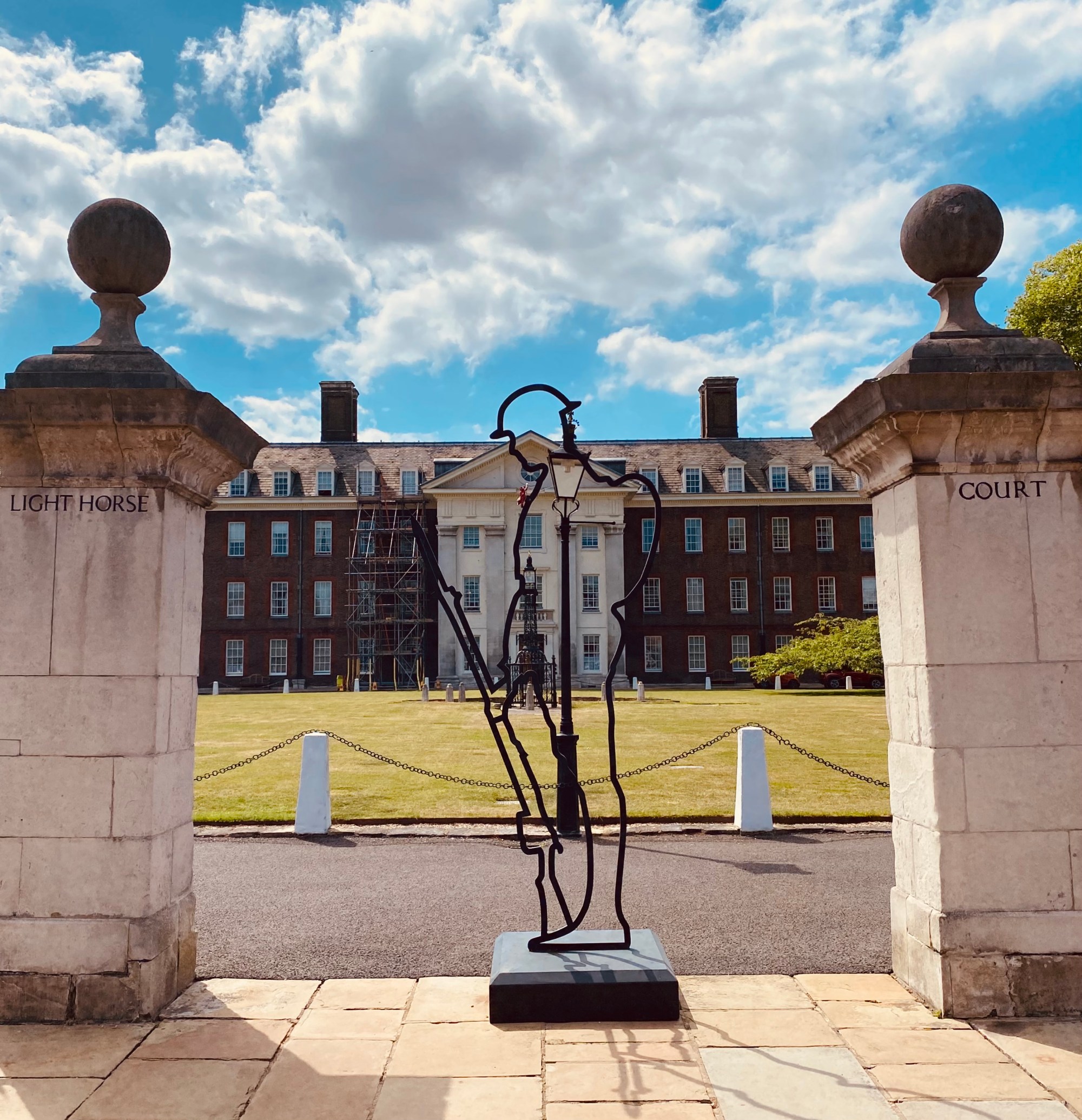
The Royal Hospital Chelsea is an incredible institution, one which I am very lucky to have had the opportunity to visit. Its residents, the Chelsea Pensioners, are genuine national treasures, and I am honoured to ride with one of them. This is the story of how a few months ago I came to visit that stunning landmark, and how I met and learned from the amazing people who inhabit it.
For the past few years I have been riding with Red Knights International Firefighters Motorcycle Club. I’m an Associate by virtue of being a community fire safety volunteer with the Fire and Rescue Service local to where I live. RKIFMC was founded in 1982 in Massachusetts. These days there are some ten thousand members across 27 countries: serving and retired firefighters, other fire service employees and volunteers (like me), and family members.
One of the members, David, is a spectacular man. Retired firefighter, former gunner, current lifeboat rescue worker, an MBE, all round amazing. One of his friends is a Chelsea Pensioner and that is the route by which the invitation to visit Royal Hospital Chelsea comes. I jump at the chance.
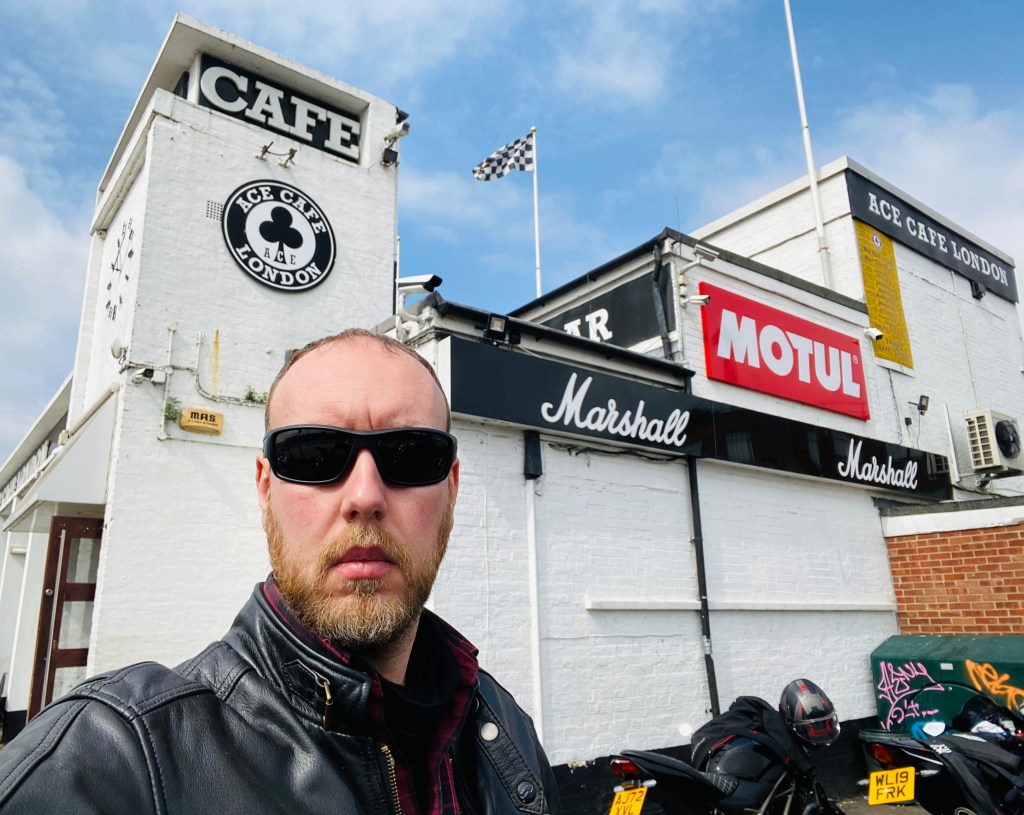
The riders meet up at the Ace Cafe on the North Circular, an old haunt of mine. My old acquaintance Mark, its managing director, is not working that day. However, apart from the Red Knights, I do see one familiar face: Darren, the founder of Bike Tours for the Wounded. BT4TW were the organisation with whom I rode to Normandy, transporting a disabled veteran pillion around D Day commemorations and sites. Serendipitous? Perhaps. We hug and he updates me on what’s happening with BT4TW. And I’ll update you too, in due course.
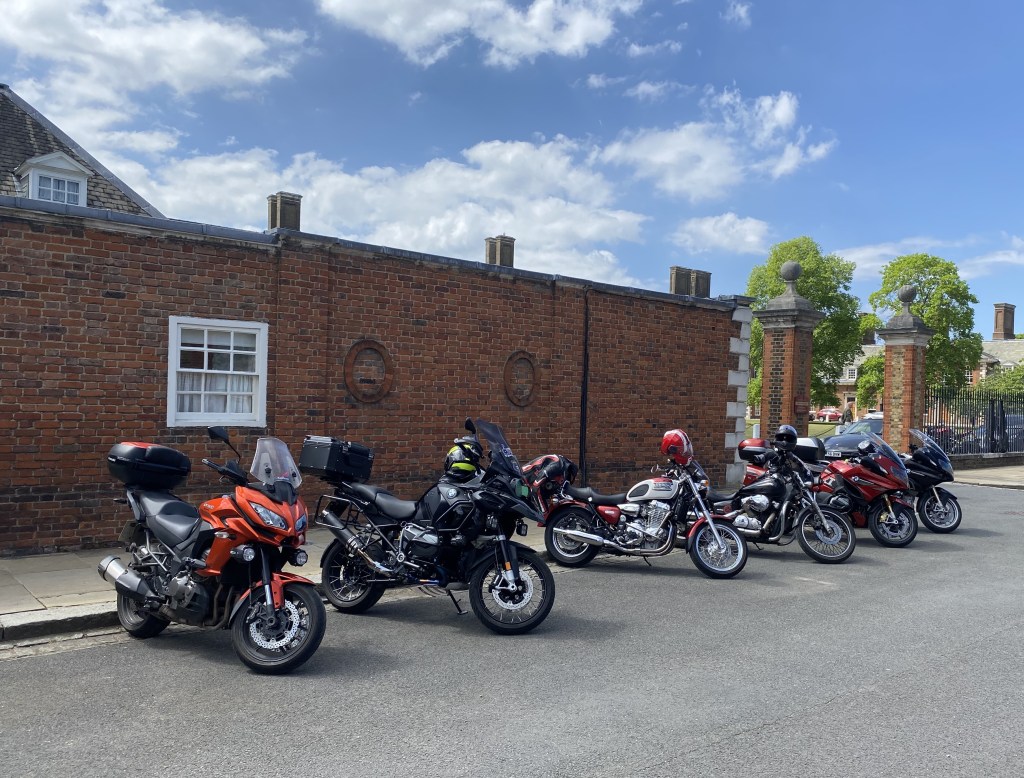
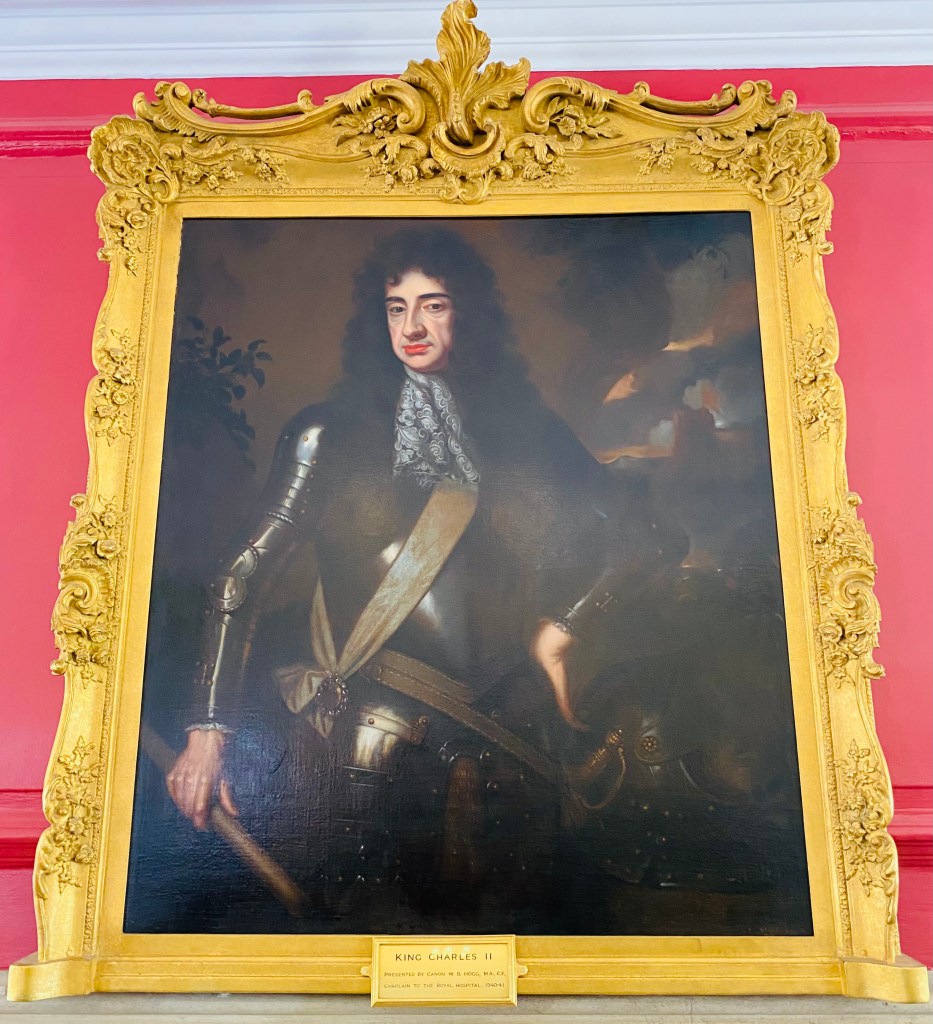
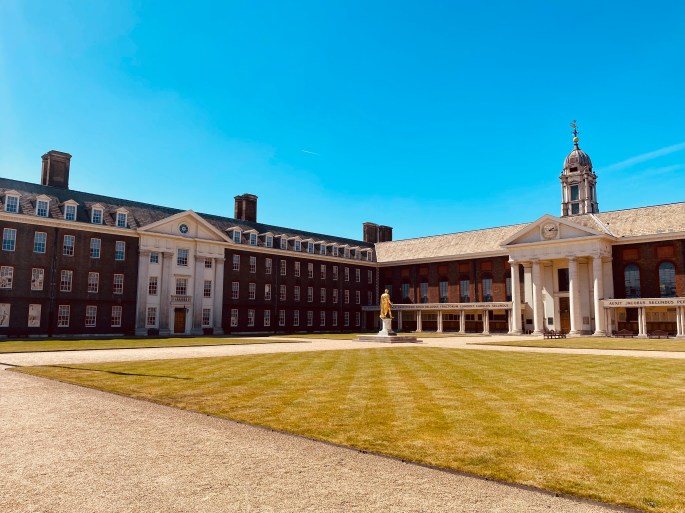
After a ride through West London, we arrive at the Royal Hospital Chelsea, its large and calm quads and measured lines a world away from the nearby roar of the city. Charles II founded it in 1682 as a place of refuge for the veterans of his wars, men who had marched under colours but now needed care in the years after service, “broken by age or war”.
The inspiration came from Paris: during his years of exile, Charles had seen Louis XIV’s Les Invalides rising on the Left Bank, a grand residence for wounded soldiers of the Sun King. England, he decided, would have its counterpart—humble in scale, but equal in spirit. Sir Christopher Wren gave it form, designing a classical structure with long colonnades, a chapel at its heart, and a Great Hall for fellowship. From the beginning, the scarlet coat was more than uniform: it was identity, marking out the Chelsea Pensioner as a figure to be honoured, not hidden away.
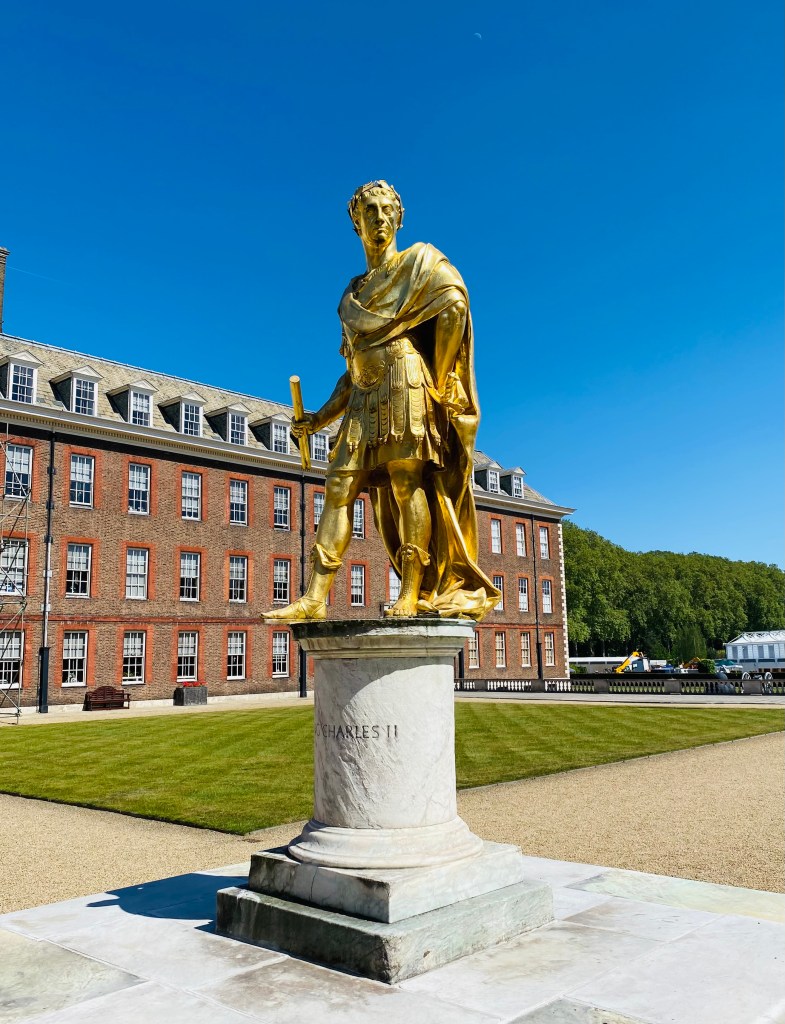
Step into the Figure Court and you meet Charles himself—or at least his likeness, cast in bronze as a Roman emperor. Yet even in effigy he refuses pomposity: where one might expect eagles or lions at his boots, he sports spaniels instead, those small, loyal dogs he loved in life. The statue is both joke and emblem, proof that the Merry Monarch could carry imperial airs without taking them too seriously. It reminds you that this place, for all its solemnity, was also founded in a spirit of humanity, with wit and warmth woven into its stone.
The 19th century brought both change and continuity. Britain’s empire grew, and with it, campaigns that stretched from the Crimea to India, from the veldt of South Africa to the Khyber Pass. Veterans of those distant wars returned not only to their villages, but also to Chelsea, carrying with them the dust of foreign battlefields and the weight of memory. The Hospital’s role deepened: not just a sanctuary, but a living reminder that the human cost of battle did not vanish with the signing of treaties. The architecture remained serene, but those who walked its courts carried echoes of cannon fire with them.
The 20th century tested both Britain and the Hospital in new ways. Two world wars flooded its grounds with stories of mud-choked trenches and desert campaigns, of the Somme, El Alamein, and Arnhem. In those scarlet coats, men who had survived some of the century’s most extreme battles stood as symbols of endurance, present at parades, coronations, and Remembrance Sundays. The Hospital itself was scarred by the Blitz but never silenced, its chapel and halls continuing to provide shelter and community. Margaret Thatcher, deeply moved by the Pensioners, became a strong supporter of the Hospital during her lifetime, helping to secure its finances and public standing in the modern era. She often visited in person, sitting with the veterans over tea or sharing conversation in the long dining hall, gestures that revealed genuine respect behind her iron public image. Many Pensioners spoke warmly of her informality, her laughter, and her habit of listening as much as speaking. It was her wish, honoured in 2013, that her funeral service at St Paul’s be followed by the burial of her ashes in the Hospital’s grounds. By the late 20th century, women joined its ranks, their service in uniform recognised within the same walls that had housed generations of male soldiers before them.
Today, the Royal Hospital Chelsea stands both as a heritage site and as home, a living institution where history is not confined to books but spoken across dinner tables and shaded cloisters. Its Pensioners, in scarlet overcoats, remind London that service is not an abstraction but a lifetime carried in body and spirit. To ride inside its gates is to glimpse not a monument to the past, but a continuity of care and comradeship stretching from the age of pike and musket to the digital age.
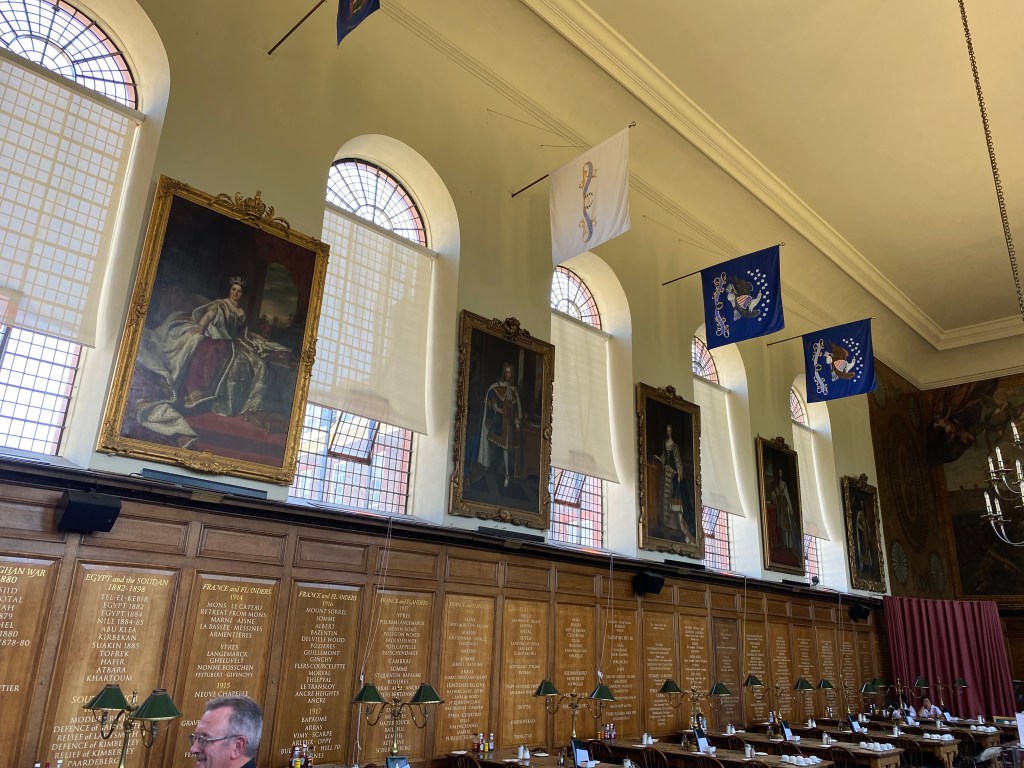
There are just under 400 Pensioners who live at the Hospital, mostly men, some women. Residency is open to Army veterans only, not the Royal Navy nor the RAF. One of the conditions for becoming a Pensioner is having no living dependents. The Pensioners are asked to fulfil ceremonial duties in dress uniform, attending royal events, parades, and other functions requiring their presence. They live in cloistered rooms. On the site are other facilities, including the Great Hall with plaques commemorating the wars in which the Pensioners previously served, and a very nice bar.
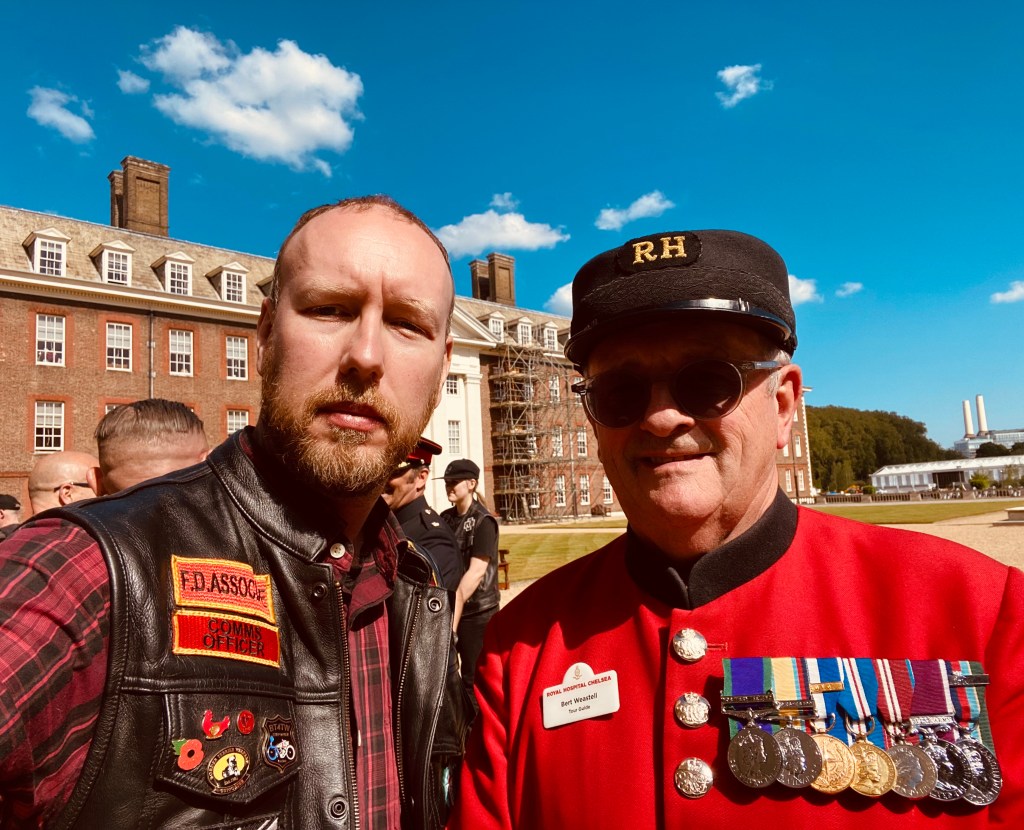
We are given a tour by Bert, a Pensioner who is very knowledgeable and engaging: most of what you’ve just read above is from him. We meet others, among them a 100 year old SAS hero, and another Pensioner: Colin. As well as being a veteran, he is a biker, and a retired Fire Service Chaplain! The visit ends with him agreeing to join the Red Knights, as a Chaplain!
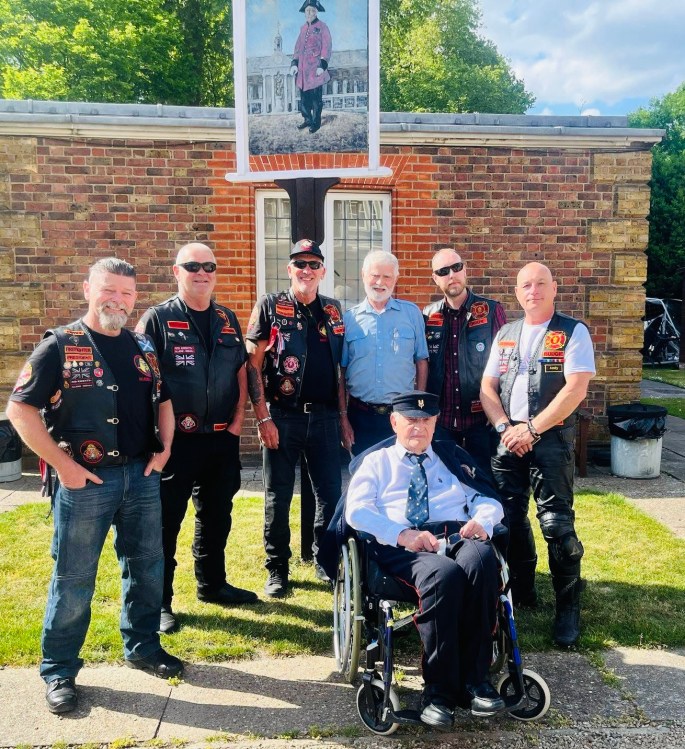
All of this gets me thinking. There are institutions and charities which support those who gave everything for others. Are we doing enough as individuals? Am I doing enough?
Food for thought. Watch this space.


very good write up Anton. Thank you.
LikeLiked by 1 person