History shuddered. A creaking three-hundred-year-old economic model collided with
newly digitalised political technology, known as “politech”. Centuries-old banks collapsed while new-fangled hedge funds made billions, and even trillions. Personal data became a more valuable commodity than oil or steel. Europe shivered. In the UK all this came to a head with the 2016 referendum: a voting format very different to ordinary elections, and subsequently one with an extraordinary outcome and of a different order of magnitude in terms of its impact. History did its own thing, as did economics. It’s unlikely either of them anticipated quite such a dramatic meeting. But the meeting occurred, and boy was it impactful..
Suddenly no one knew what Europe was. What was the European idea? Was there ever a “European Dream”? Surely there was trade and sustained periods of peace and prosperity before the European Union existed? There were also times of terrible strife, from the horrors of the two world wars to the millennia old bickering between a multitude of competing principalities. The shock of the UK referendum result, in the country of Winston Churchill who was one of the founding fathers of the European Union, threw up many questions.
The economist in me buried his head in his hands, fearing short term harm based on available data. But the historian was curious about the bigger picture. Fifty years is not much time in historical terms. Where did current developments sit within the historical arcs of two centuries or five centuries? Was anything really that different? On the other hand, in an age of extremes, with historical cycles becoming compressed and increasingly intense, perhaps it really was? An economist takes sides. An historian remains dispassionate and neutral, having seen it all before.
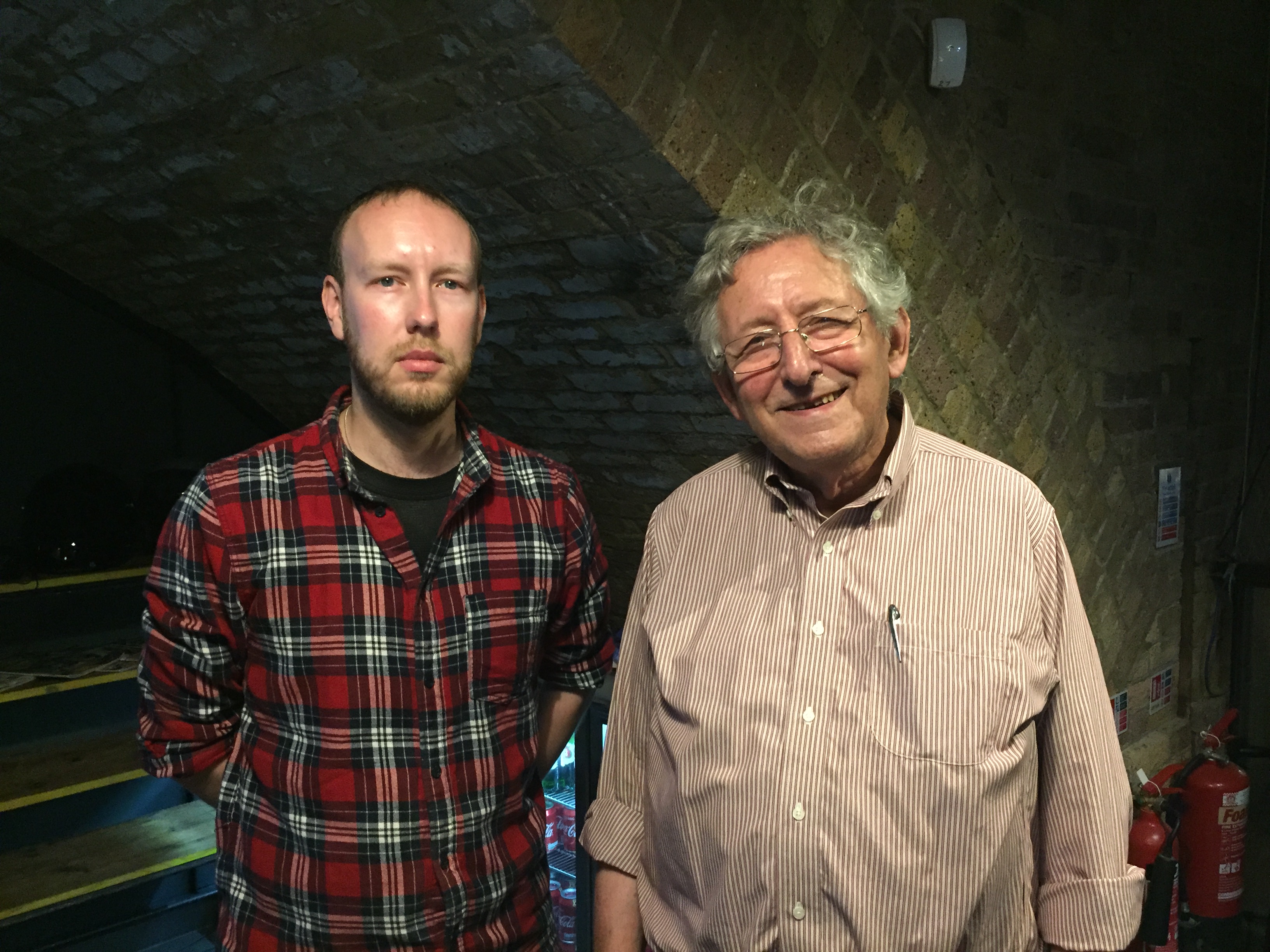
Two years later in the summer of 2018 I found myself having dinner with Ted Simon, arguably the greatest living motorcycle adventurer and author of the epoch defining Jupiter’s Travels. I was ushered to the table where he was sitting, a picture of serenity and good humour, sipping a glass of rosé. I tentatively sat down next to him, and apologised for my lack of coherence. He was very kind. Over the course of our conversation it transpired that he loved France, California and Columbia. Prior to his epic 60,000 mile motorcycle journey around the world, he’d cycled around the whole of France aged 17 in the late 1940s. He thought Brexit was not a good idea, and remembered how Europe was before the EU existed: in his opinion it was worse. One was hard pressed to argue with the child migrant from 1930s Germany to Britain, the son of a Romanian Jewish father and German mother. In his lifetime things have indeed been worse.
The Foundation to which Ted Simon lent his name tries to support and encourage motorcycle “adventurers” to promote dialogue and peacebuilding among the communities which they visit. Over the course of the dinner (we both went for a steak salad), it became clear that what started out as a vague plan to ride around a few European cities and hang out with some mates had become something different. The responsibility to make it different and somehow significant was mine alone.
I got my phone out and opened the Maps app. A loop became apparent, roughly 3,000 miles long. The ferries to and from the UK would sail from Harwich to the Hook of Holland and from Santander to Plymouth. 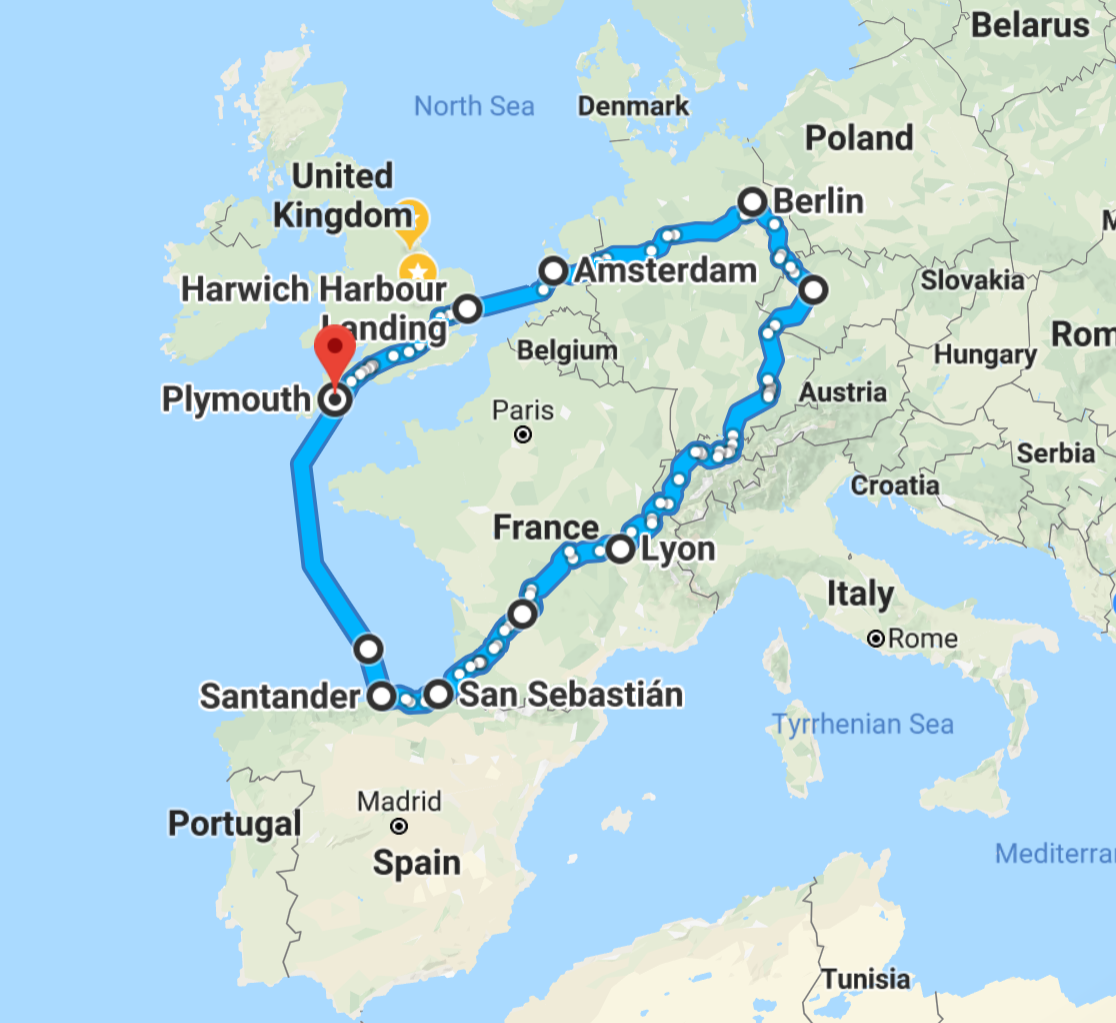 The journey lay through northern, eastern, western and southern Europe, through EU stalwarts France and Germany, via non EU members like Liechtenstein and Switzerland, and past some regions with significant historical questions of their own, like the Basque Country. Friends’ floors in Amsterdam, Berlin, Prague and Lyon, an inn at a medieval tournament in Castelnaud La Chapelle, biker friendly hostels elsewhere. And the questions to be asked: “What is Europe to you?” “Is there such a thing as the European Dream?” “Where do we go from here?” “What is the best way for us preserve peace?” “How can we continue to improve?”. A starter for ten.
Ted Simon said there were two essential items to pack for such a journey: some wire or cable ties, and a notebook. Both have been purchased. Thank you for your kindness and for the inspiration, Ted. Hopefully the notebook will see a lot of action.


Have a great trip. Look forward to hearing about it.
LikeLiked by 1 person