The evening before I look at several routes to Biarritz. The most obvious one, via Zaragoza and the Spanish side of the Pyrenees is the longest, but it seems the easiest. However, around the point where I’d have to actually cross the mountains there’s a severe weather warning for thunderstorms and flooding in place. Recalling my near death experience not far from there a few weeks before, I decide to extend the route, taking me across the mountains a bit further west, somewhat closer to San Sebastian. In all it’s just over 600km, a hard day’s riding. I ensure I have enough fruit, baby food, cereal bars and water with me, and before setting off, along with coffee and breakfast I take an aspirin to alleviate numbness and ensure good blood circulation.
The ride is OK. I succeed in avoiding severe weather and stop a few times, twice for petrol and a couple more times to drink water, snack on a banana or pouch of baby food, and stretch my legs. I drink a ristretto during one of the petrol stops too. By the time I’m crossing the Pyrenees, on a narrow and twisty mountain highway, it’s early evening, there’s not far to go and I’m feeling completely fine: no pain or fatigue to speak of and maybe only a bit of stiffness in the shoulders.
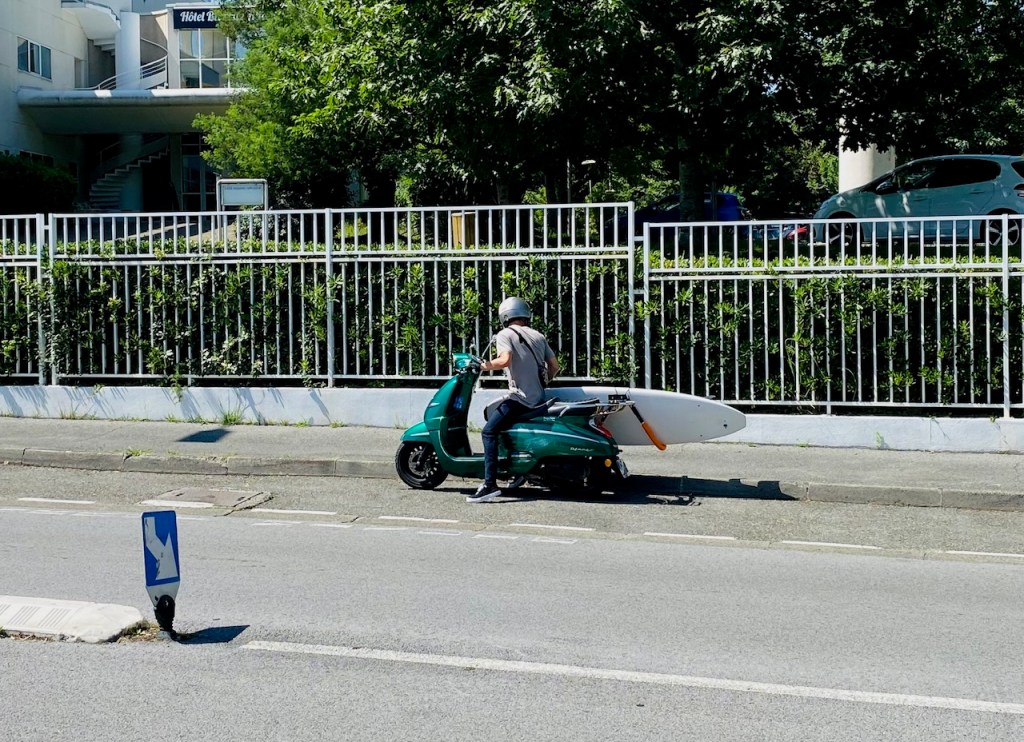
Then I cross the invisible border and I’m back in France, a couple of weeks after I left it. It’s the day after the summer Solstice which means sunset is still hours away as I roll into Biarritz. At first I see nothing but cars, but soon enough a cafe racer appears, being ridden by a woman with a vintage looking open face helmet, and then another. Then there is a group and suddenly the only vehicles on the street are custom bikes, and me of course. A couple of scooters pass hauling surfboards. And then I’m in the older part of Biarritz, and I hope at this point quite near the place I’m going to be staying at.
Biarritz, a picturesque coastal town situated in the Basque region of southwestern France, has an interesting history. Originally a small fishing village, the town’s roots can be traced back to the 12th century. Its strategic location along the Bay of Biscay and close proximity to Spain made it a hub for maritime trade, attracting fishermen, sailors, and merchants from various cultures. However, it wasn’t until the 19th century when Biarritz experienced a transformation that would shape its destiny. Empress Eugénie, the wife of Napoleon III, visited the town in 1854, and enchanted by its pristine beaches and stunning scenery, she decided to build a summer residence here. This royal endorsement turned Biarritz into a fashionable seaside resort and attracted European nobility and aristocrats, transforming it into a popular vacation destination.
Throughout the 20th century, Biarritz’s allure continued to grow, solidifying its reputation as a playground for the rich and famous. The town’s beach culture, coupled with the rise of surfing, further propelled its popularity among tourists and surf enthusiasts from around the world. Today, Biarritz has managed to retain its charm and elegance while embracing its vibrant surfing scene and Basque heritage. With its unique blend of natural beauty, and a thriving tourist industry, Biarritz stands as a testament to its remarkable journey from a humble fishing village to a globally renowned coastal gem.
I booked accommodation a couple of nights before. According to the booking website it’s a very cheap room in a self catering gite, costing just a few Euros a night, cheaper than camping. The website assured me that it has everything one needs: cooking facilities, a cafetiere, a shower, wifi, and it’s 15 minutes’ walk from Cite de l’Ocean which is the main festival site for Wheels and Waves. I pass a long wall, and see no sign of any building. Eventually it’s clear that I’d passed the address. I turn around and ride alongside the wall again in the opposite direction. I see a gate which I’d missed the first time around, and decide, what the hey, it’s in the right place on the map, it must be somehow connected. I swing the bike around and enter it.
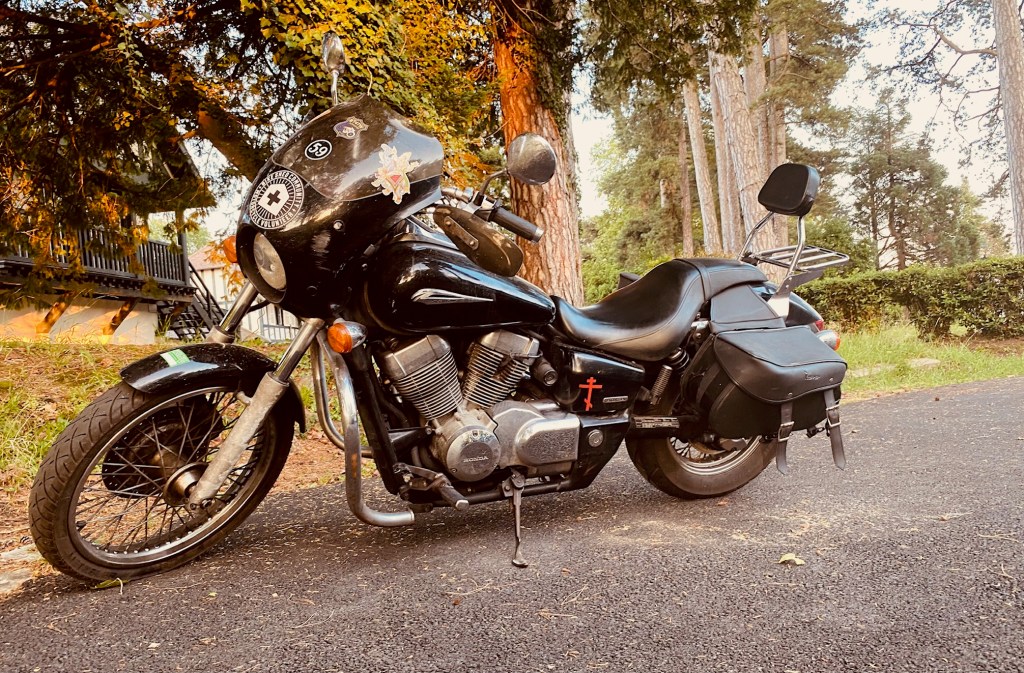
I find myself inside a beautiful tranquil estate among tall trees with the evening sunlight gently permeating their foliage. I stop the bike, dismount and walk towards a building some distance away. It eventually reveals itself to be a remarkable Tudor style manor. I push the large oak door open and enter a huge wood panelled reception area with opulent furniture and large Renaissance-esque paintings on the walls. This is apparently Le Domaine de Françon.
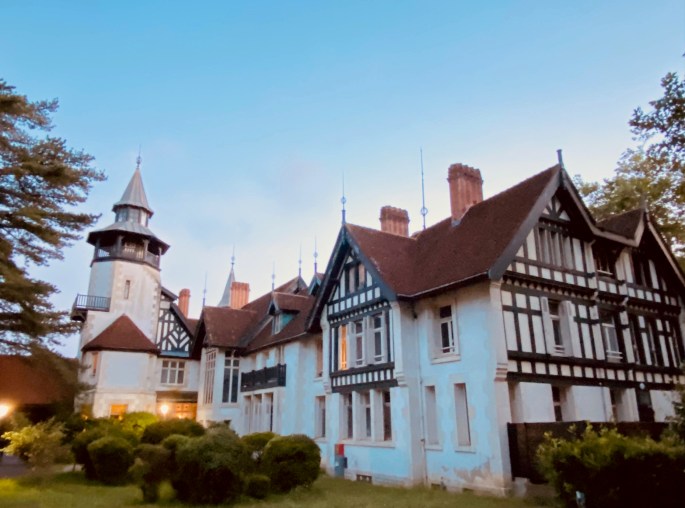
The manor was built in the mid-19th century during the town’s golden era, a period when Biarritz was transformed into a fashionable retreat for European aristocracy. The building was designed as an English industrialist’s summer residence, embodying that time’s opulence and high aesthetic standards mingled with mediaeval English nostalgia. Over the years, it has been meticulously maintained, preserving its historical significance while adapting to the modern era. During the 20th century, the manor was converted into a hotel, and later had several smaller houses built in the grounds designated as gites, one of which I was apparently destined for.
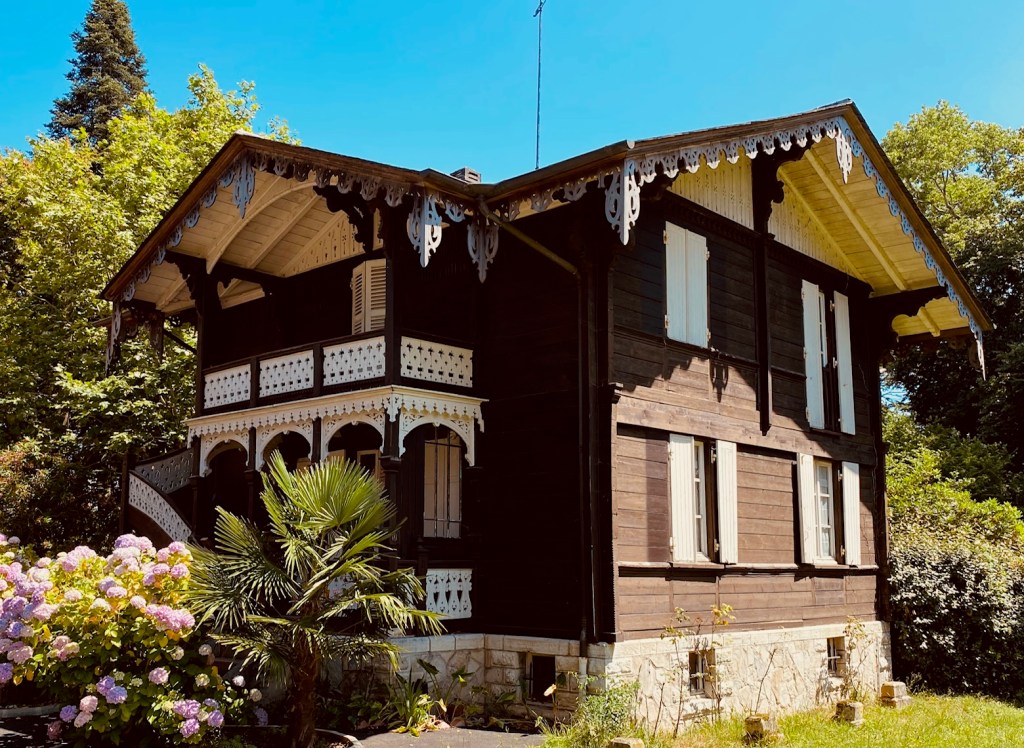
I do my best to communicate with the receptionist in my school level French, and after a bit of paperwork she escorts me to my gite. The estate seems mostly empty and instead of a room, I have a large 4 person house to myself. It’s perfect: a comfortable bedroom, clean bathroom, a fully equipped kitchen and a spacious veranda jutting out among the trees. It’s very quiet bar the bird song. A nice cat is stretched out at the bottom of the stairs in a beam of the setting sun.
I gratefully unpack what little gear I have, consult the map and head towards Cite de l’Ocean, a venue high above the beach whose grounds house the main festival site.
The building itself is a groundbreaking museum and cultural hub that offers an immersive journey into the heart of the ocean’s depths. Opened in 2011, it was designed by renowned architects Steven Holl and Solange Fabião, who were inspired by the concept of the sea and the sky converging on the horizon. The building’s striking design, featuring an undulating landscape that mirrors the ocean waves, embodies this vision and has become an iconic part of Biarritz’s skyline.
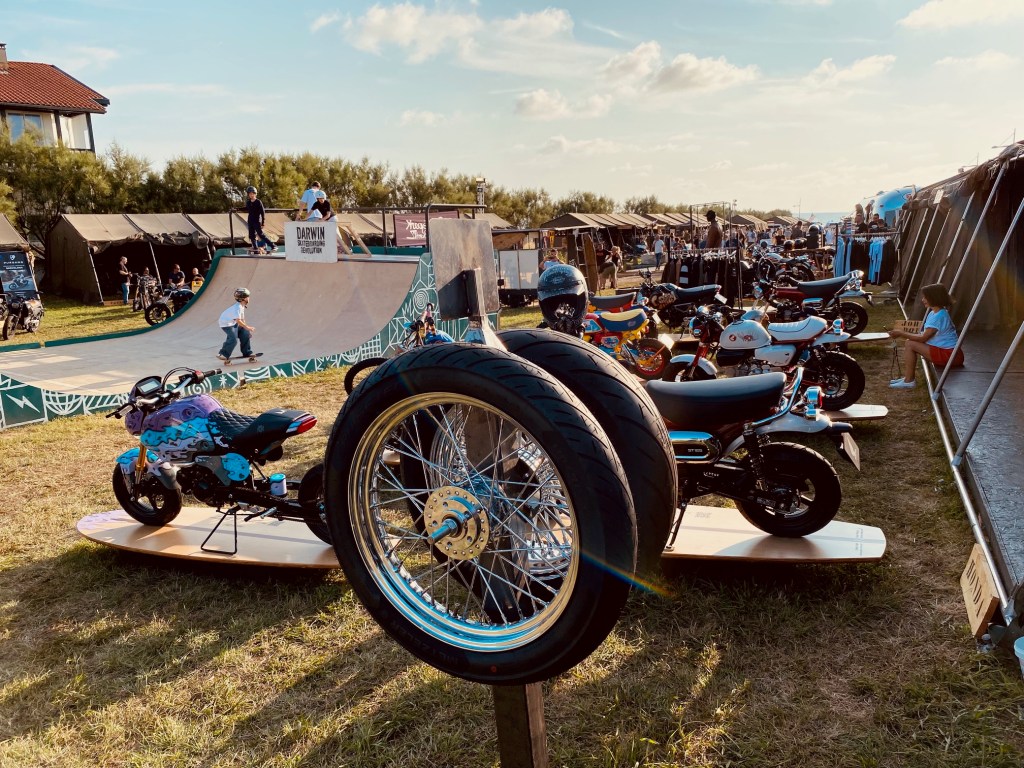
The “Wheels and Waves” festival is a stylish and exciting event that celebrates the harmonious fusion of motorcycle culture, surfing, art, and music. Held annually this festival brings together motorcycle enthusiasts, surfers, artists, and musicians from all corners of the world. The event was first launched in 2012 and has since grown into a much-anticipated gathering that attracts thousands of attendees each year. With Biarritz’s stunning coastal landscape as its backdrop, the festival offers an extraordinary experience where participants can indulge in fun motorcycle rides along scenic coastal roads while also catching the region’s renowned waves. Throughout the “Wheels and Waves” festival, a vibrant atmosphere engulfs the town. The event showcases the craftsmanship and creativity of motorcycle builders who present their one-of-a-kind bikes, reflecting a blend of vintage aesthetics and modern engineering.
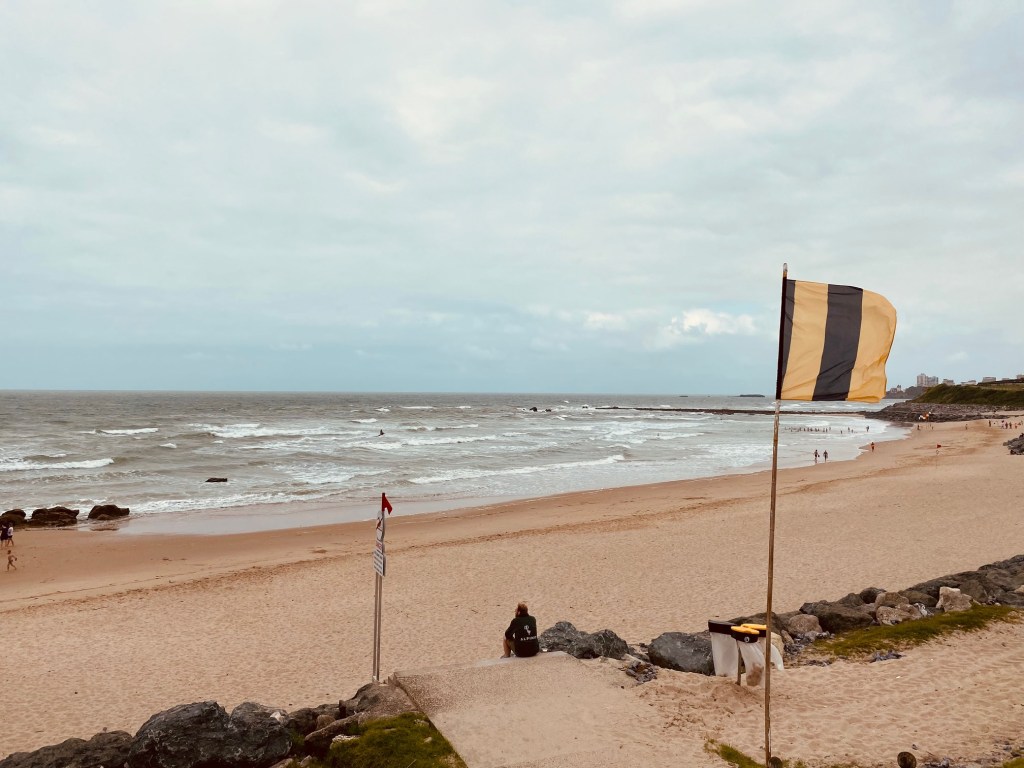
I’m definitely there for the “Wheels”, but the “Waves” aspect is no less important since Biarritz, often hailed as the surfing capital of Europe, offers a serious surfing experience amidst its impressive coastal backdrop. The town’s surfing culture can be traced back to the 1950s when enthusiastic Californian surfers discovered its pristine waves and ideal conditions. Since then, Biarritz has become a mecca for surfers from all over the world, attracting both beginners and seasoned professionals seeking to ride its renowned swells. The Côte des Basques beach, in particular, is revered for its consistent waves and is considered the birthplace of French surfing. Surf schools and rental shops dot the coastline, catering to surfers of all skill levels, making Biarritz an inclusive and accessible destination for anyone looking to catch some waves. Staying true to Biarritz’s surfing heritage, the festival features exciting surf competitions, where surfers showcase their skills and ride the waves that have made Biarritz a world-renowned surfing destination.
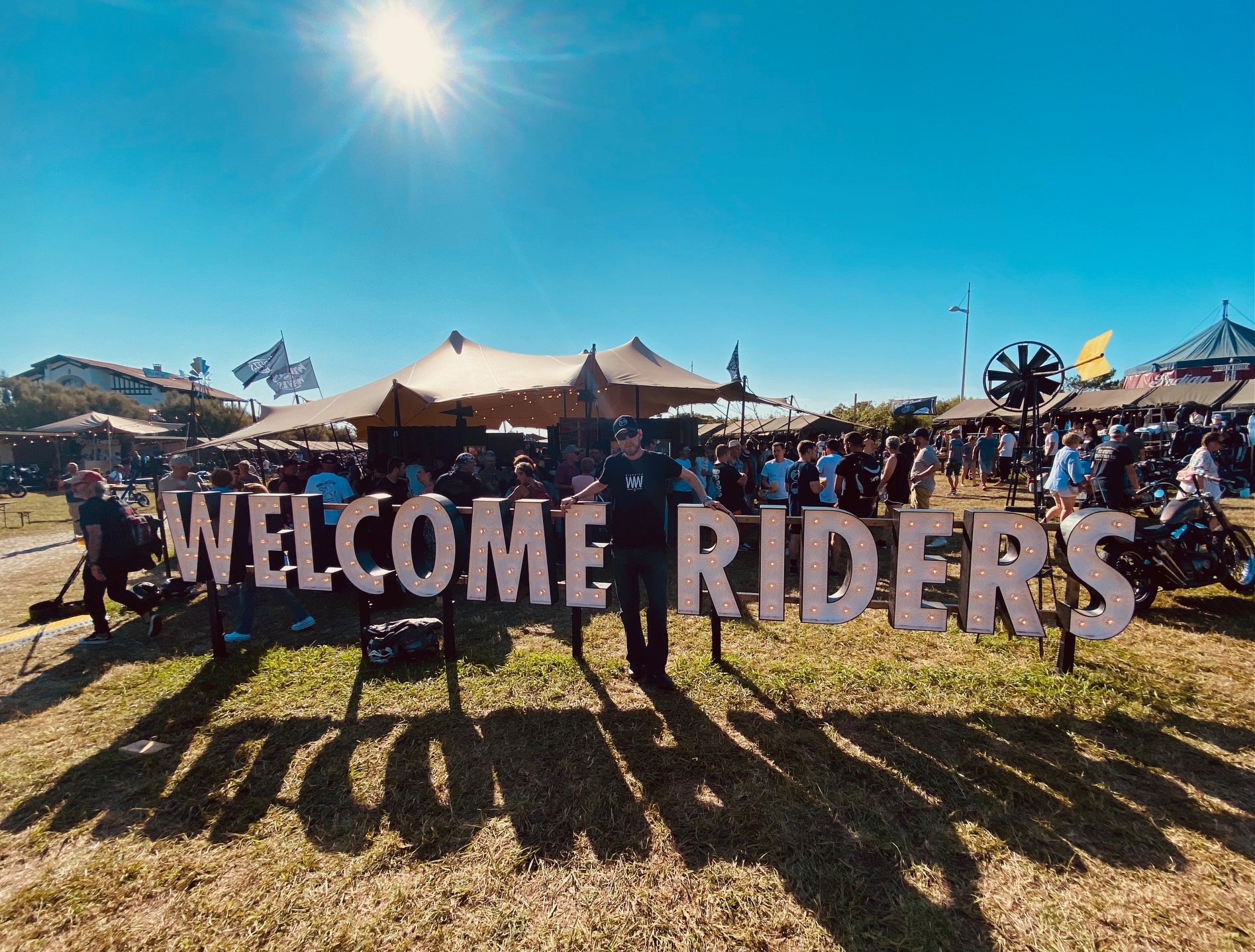
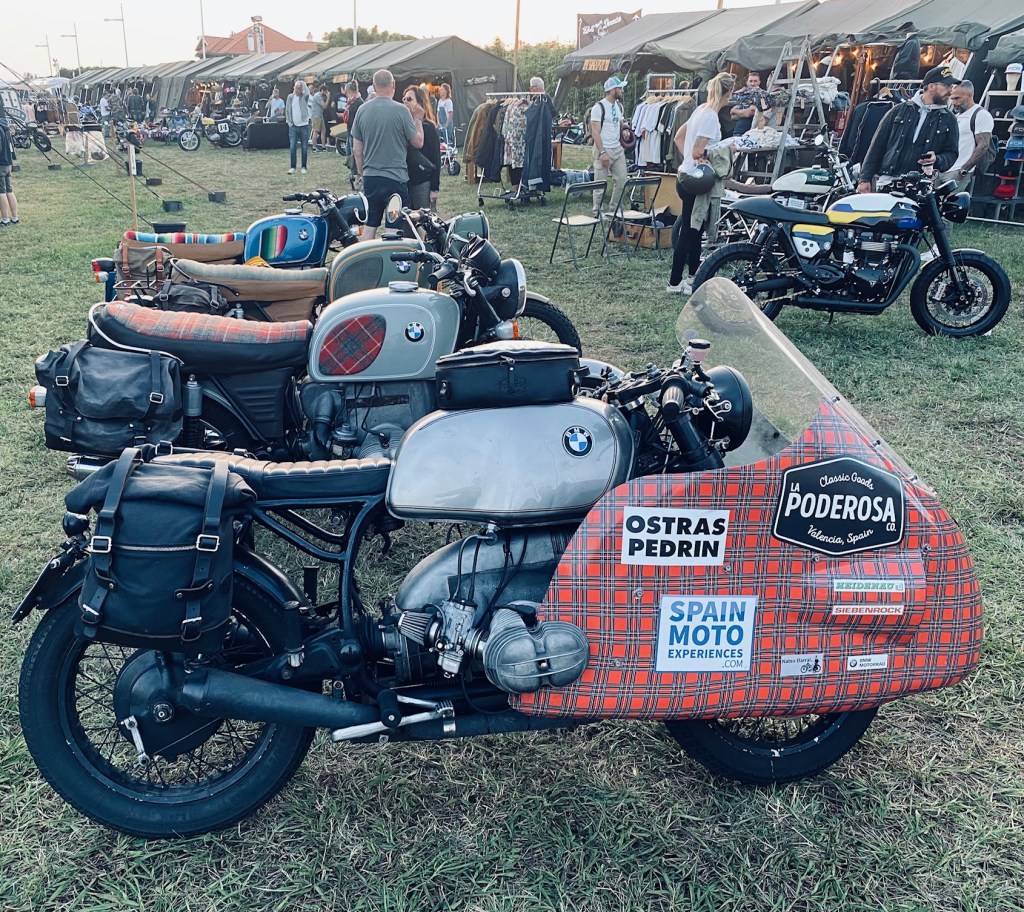
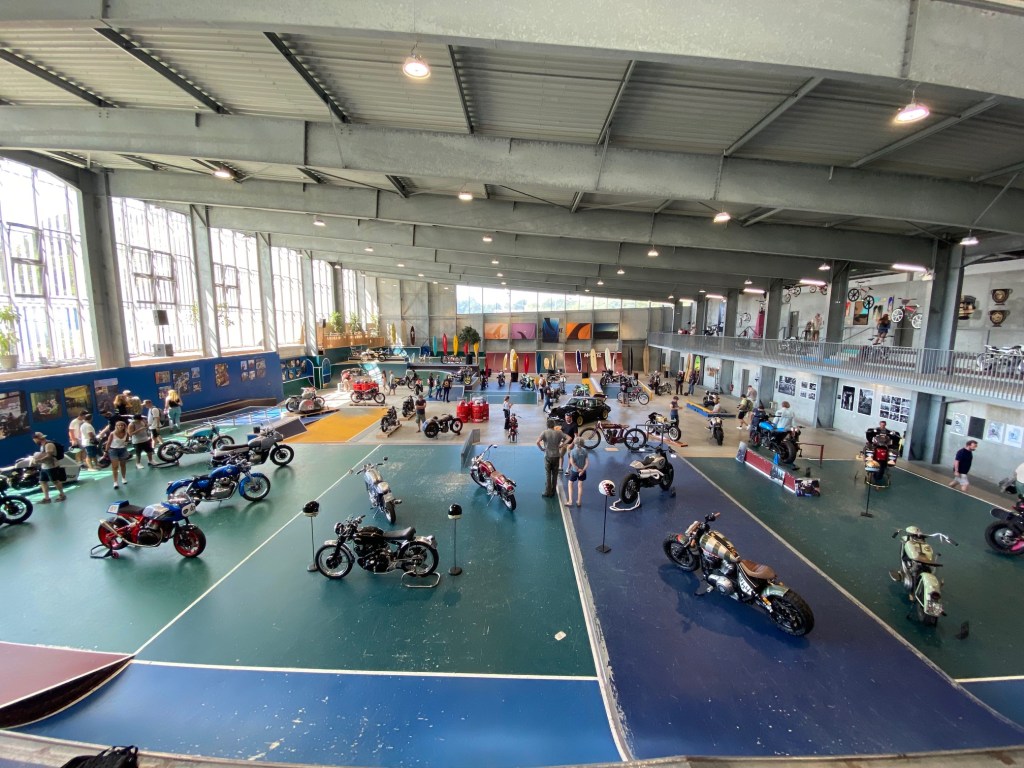
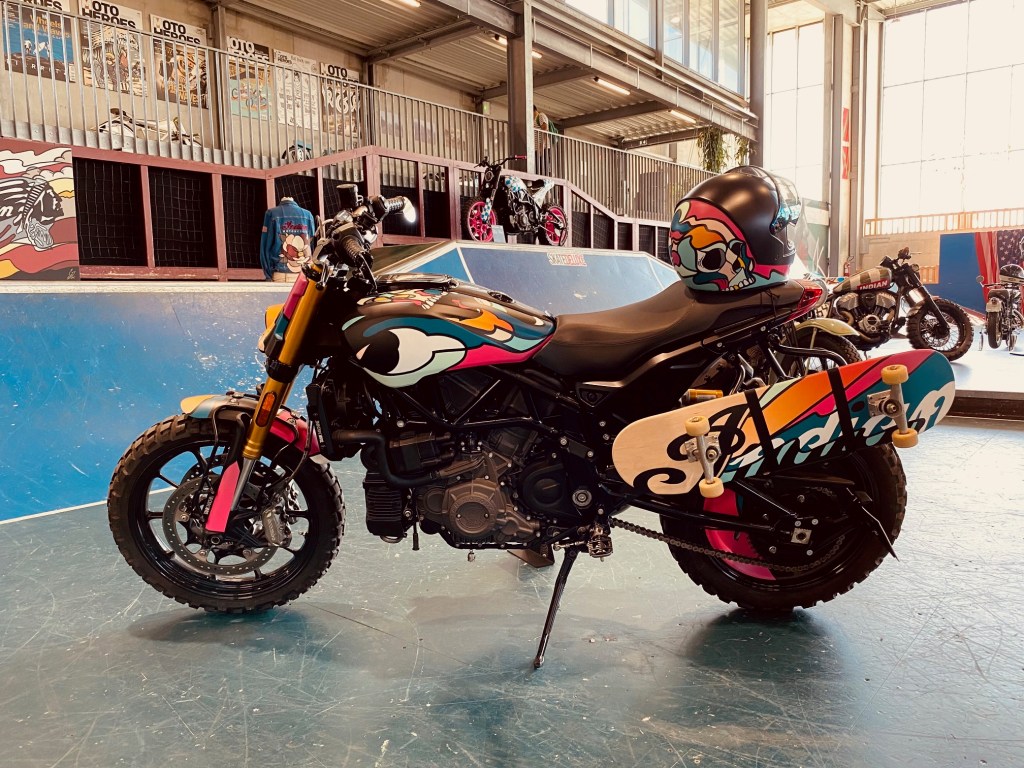
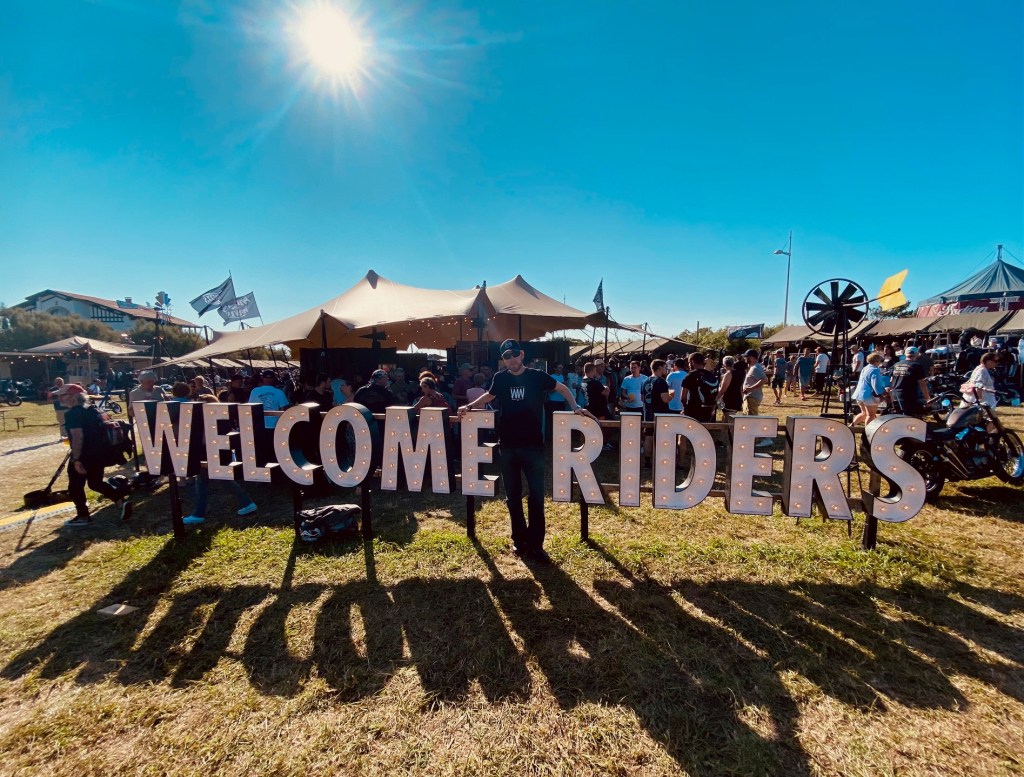
I arrive at the festival site to be welcomed by the sight of many hundreds of bikes, many vintage, some not, parked outside the venue. I get my wristband and enter the arena. It’s very pleasant and relaxing: a low key acoustic band is playing, it’s very busy but doesn’t feel crowded and the orange sunshine is mild and temperate. I take my time to soak up the ambiance and to visit the various manufacturers’ stands and chat with people. Indian has the most visible presence, and I also visit Honda, Triumph and several others. Royal Enfield and Livewire are offering test rides. There are many beautiful vintage bikes on display throughout, and a 100 year old Wall of Death, which I check out. The surfing is happening beyond the site, beneath the cliffs at its far end. One can just about make out the sound of the waves crashing against the beach.
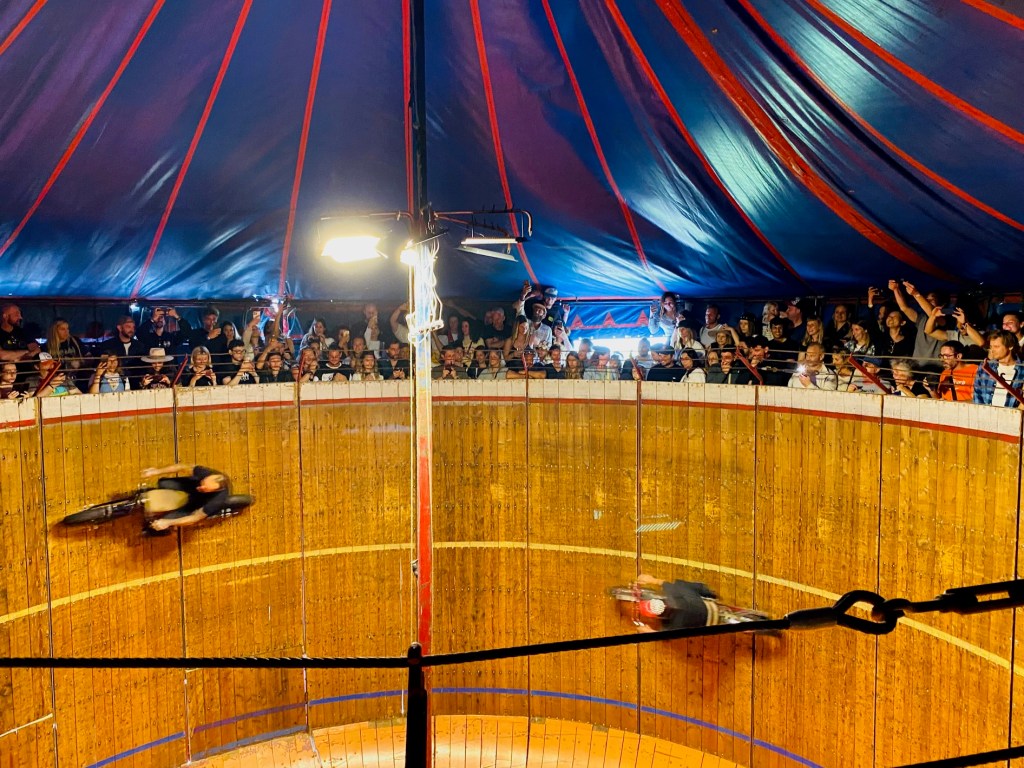
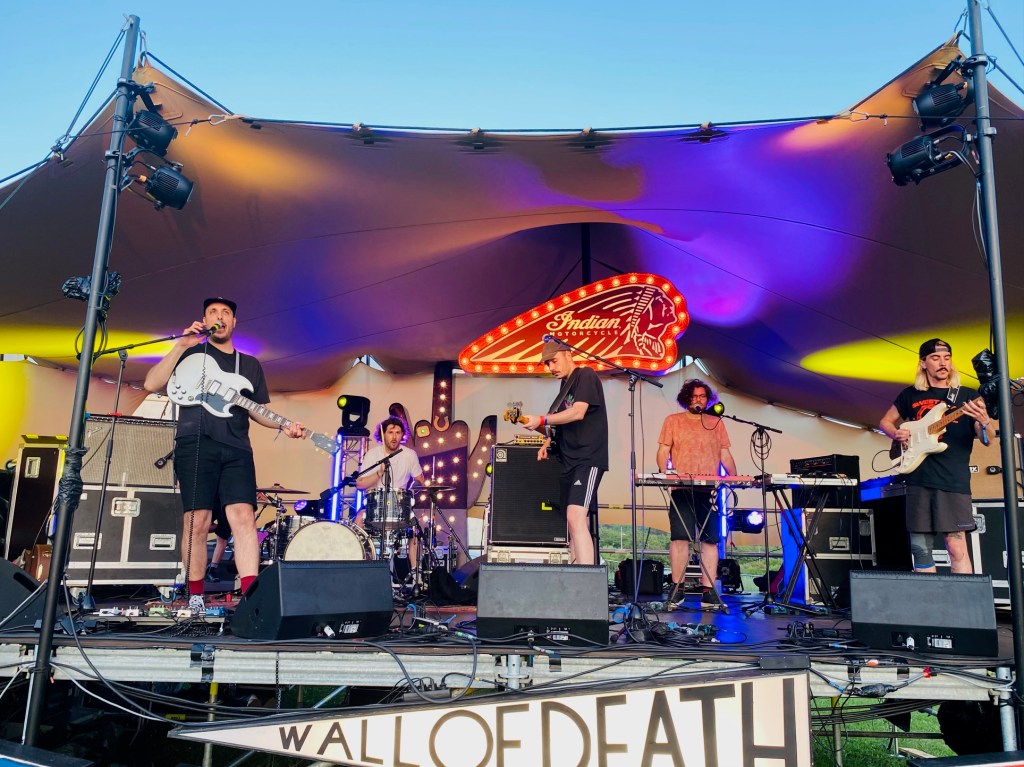
Eventually I settle into a deckchair by the Royal Enfield stand with a drink. I’m within sight and earshot of the main stage, and I relax into my seat, exchanging a few pleasantries with the French couple next to me. As the sun sets, the celebrations continue with live music performances and art displays that add an extra layer of cultural flair to the gathering. Behind me there is a large skateboard half pipe with skaters taking part in a stunt contest, the slamming of their boards on the surface making a chaotic but pleasing racket. “Wheels and Waves” feels like a dynamic celebration of freedom, creativity, and the enduring spirit of adventure, and a true highlight for motorcycle and surf enthusiasts alike.
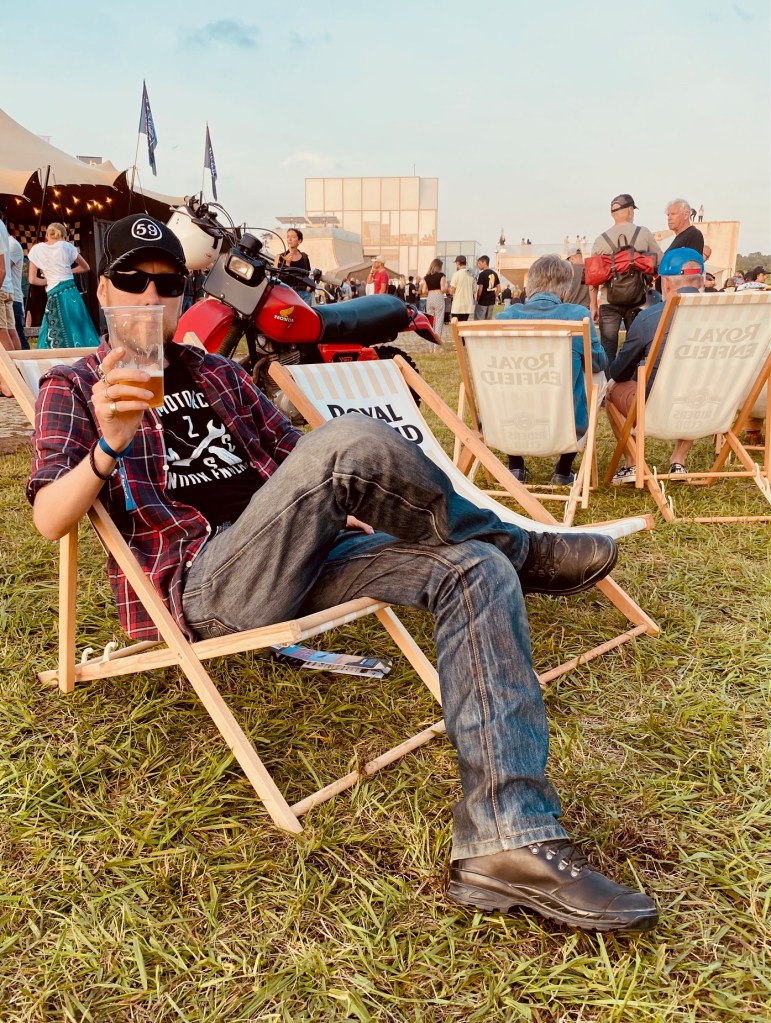
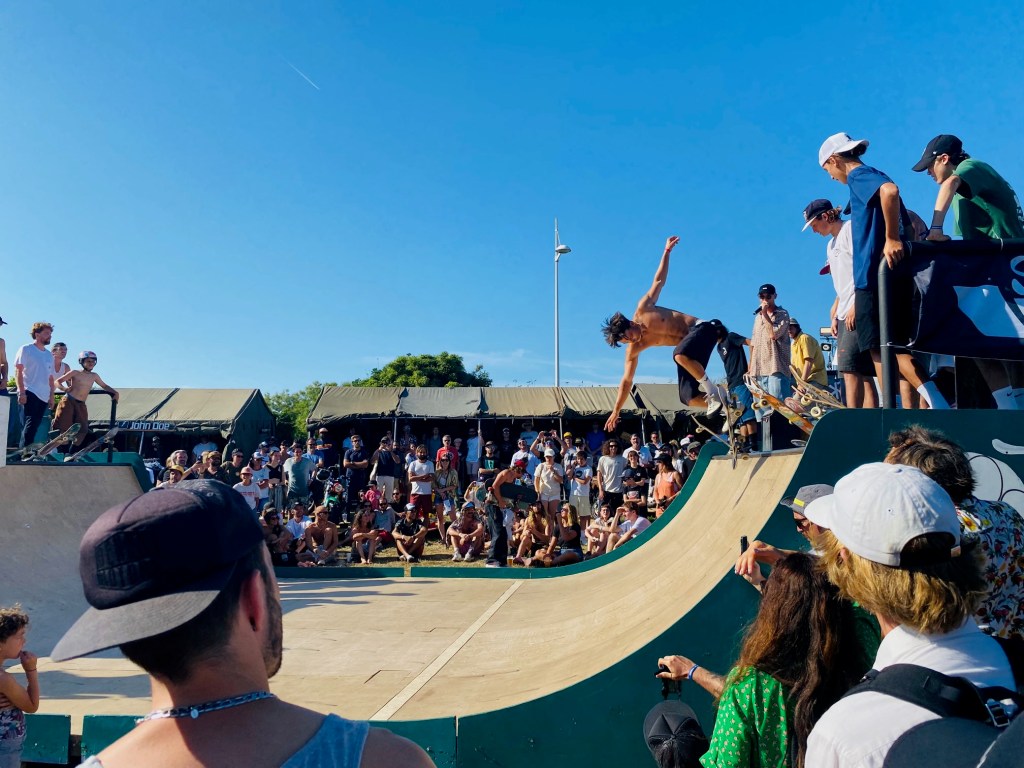
The next few days are spent thus. In the mornings I go to the buffet breakfast at the main mansion, take coffee, fruit and pastries back to my gite and consume them on the balcony among the trees and birdsong. In the day I ride or walk to the various events connected with the festival away from the main site, and in the evenings I hang out in the main arena, make friends with people I meet and take in the music, the skating, the surfing and the art displays.
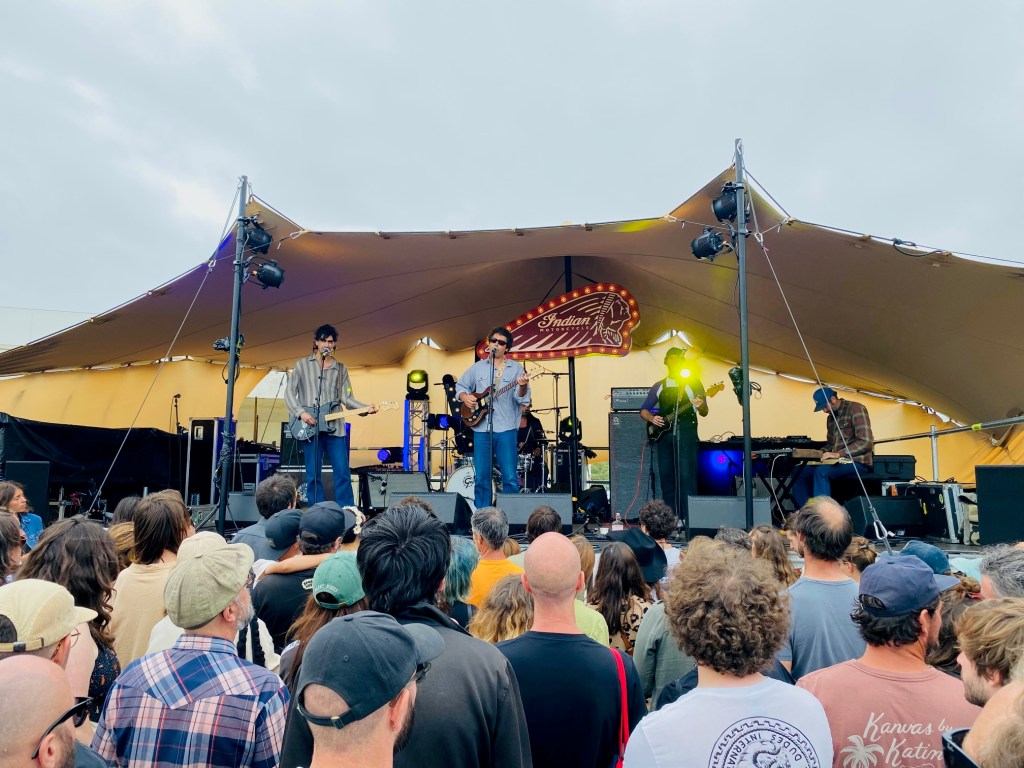
The Allah-Lahs, a Californian indie rock band with a signature blend of surf-inspired melodies and psychedelic vibes, deliver a charming headline live set at the conclusion of the festival. With their unique sound and infectious energy, the Allah-Lahs transport the festival-goers to a dreamy 1960s LA-tinged realm where the spirit of the open road and the allure of the rolling waves coalesce. The band’s soulful vocals and intricate guitar riffs resonate through the air, perfectly complementing the laid-back atmosphere of” Wheels and Waves”. Their performance is a captivating journey, evoking a sense of wanderlust and nostalgia for carefree summers spent by the beach, where music, motorcycles, and surf culture converge in perfect harmony. The Allah-Lahs’ set is a defining moment, emblematic of the festival’s celebration of freedom, artistic expression, and the love of adventure. It occurs to me that these few days are the first time I feel truly relaxed on this trip.
The festival finishes on Sunday afternoon, with the headline set from the Allah-Lahs taking place at lunchtime. I contemplate riding back to Barcelona and beyond the same day arriving maybe around 9pm, but there is a severe weather warning in place for extreme heat around Zaragoza and Lleida, with temperatures potentially reaching as high as 45, and I make the sensible decision to ride the next morning, as early as possible, hopefully missing the worst of the heat. I have the feeling that it won’t be the most pleasant of rides, but hopefully not fatal if I’m cautious and mindful. With that I pack, ride to a nearby petrol to fill up for the next day and turn in for an early night.
 Blac Ridere