Despite the late finish the previous evening, I roll out of bed at 7am as usual, pull on jeans, a t shirt and flip flops and make my way down to breakfast. This is the most upmarket hotel I’ve stayed in during the trip, delusionally boasting 4 stars, and easily the worst. Breakfast is a wilted, dry and tasteless affair. The coffee is probably the most awful I’ve had in two decades, although not as bad as one I’d tasted in a Northern Irish prison early in my career as a justice reformer.
I want to set off as early as possible to beat the heat later in the day as the ride is over 300 miles, which is at and likely beyond the comfort limit for me. I check out handing my key card in to the disinterested receptionist, pack up the bike in the dark and dirty underground car park, avoiding puddles of urine, and roll out. Leon as a city is beautiful, the hotel is anything but.
I leave the city and allow the satnav to guide me in the direction of Zaragoza. I’m conscious that as I move further South in Spain, following my detour West, temperatures increase, and I know that one does not tempt fate or mess with nature if one can help it.
Surprisingly perhaps, the day’s challenge is not heat, it’s rain and wind. The forecast has a fairly low chance of it along the route, less than 10%. Yet as I make progress I observe a large expanse of black clouds and the tell-tale vertical segment of sky of a different colour to the rest of the horizon across a mountain range, a couple of hundred miles into the day’s riding with over a hundred still to go. The air begins to change too, becoming cooler and more worrisome. I make the safe and sane decision to stop at the next petrol station and pull on my waterproofs.
I fill up, pay, and get a ristretto. After moving the bike away from the pump I drink the coffee, as I unpack my waterproofs from the tank bag between sips. My textile Bering jacket and my denim Rokker jeans are both waterproof, but the extra layer will ensure close to 100% dryness even in the worst conditions.
It turns out that I’m not the only person in this frame of mind. As I’m drinking my ristretto, three bikes pull into the petrol station, ridden by dudes wearing the cuts of a local 1% MC. Two are full patches, one is a prospect. One full patch and the prospect are big, clinically obese. The other full patch is short and wiry. One of his legs is much shorter than the other and he is wearing a New Rocks boot with a huge platform on the shorter one. The three of them fill up and then pull over a few metres from me and begin to put on their waterproofs. At one point the short guy decides to go inside the petrol station, and walks directly towards me. As he reaches me, he points to my bike, makes a clicking sound with his tongue and winks. I guess that means I’m OK by him, and consequently his crew.
Fully waterproofed, I pull out and head towards the mountains. The rain hits presently, and it’s heavy, but nowhere near the flash flood I experienced in the Pyrenees two days before. The waterproofs mean I’m comfortable and I maintain a steady 75mph through the downpour. The water stops soon enough and I whisper a short prayer of gratitude. But a new challenge lies ahead: wind.
It’s unexpected and unlike anything I’ve experienced on the trip so far: less airflow, more a physical force not so much resisting me as attacking my body, battering me diagonally from the front and occasionally throwing Veronica and I a metre or so off course in a random direction. This makes overtakes of any large vehicle moving slower than 105km/h unsafe, and I only dare do it when there is a clear and consistent pause in the wind. The struggle is extremely physical, and holding on to the handlebars is a genuine material challenge. This lasts for 30 or so miles. By the time I’m near Zaragoza, it calms down, and I roll into the city relatively collected.
Zaragoza, located in Eastern Spain, has a rich and diverse history that spans over two millennia. The city was originally founded by the Romans in 25 BC under the name Caesaraugusta, serving as an important outpost in Hispania. It thrived as a key administrative and commercial hub, evidenced by its impressive Roman ruins that can still be admired today. In the Middle Ages, Zaragoza became a significant centre of Islamic culture and played a crucial role during the Reconquista. The city witnessed various historical events, including the crowning of King Ferdinand II of Aragon and Queen Isabella I of Castile, who united Spain in the late 15th century.
I stay amongst, and find myself captivated by, the modern-day techno-cool charm of Zaragoza. Nestled on the outskirts of the city, I am staying at a hotel located at the Zaragoza World Trade Centre, which serves as a bustling hub for business and commerce. The towering high rise buildings and sleek architecture of this district blend with the city’s historical backdrop well, creating a stark but visually pleasing contrast that reflects Zaragoza’s dynamic spirit. The World Trade Centre itself is a symbol of the city’s growing prominence on the global stage, fostering international connections and facilitating commerce.
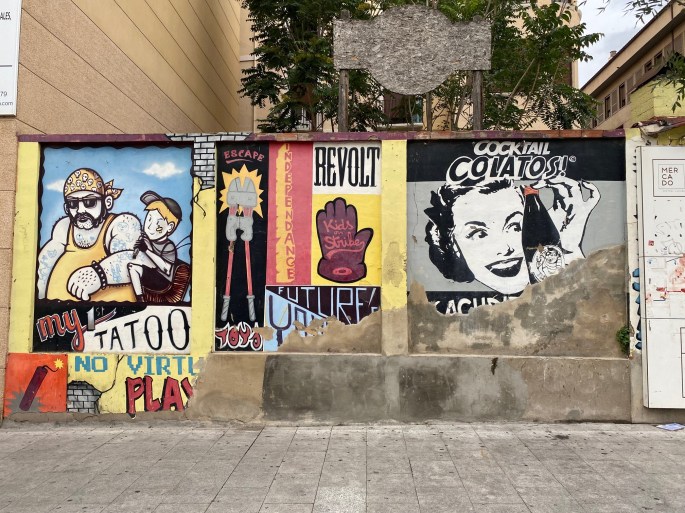
I’m staying opposite an exciting tech innovation facility known as the Unreal Training Hub. Exciting to me, because one of my oldest and closest mates, James, is a senior team member at Epic Games, specifically working with the Unreal Engine for the best part of a couple of decades, and so I’m naturally interested. The sleek looking facility offers opportunities for aspiring developers and creators to hone their skills in virtual reality and game design. I’ve read that the Hub has become a catalyst for innovation and talent in Zaragoza, attracting enthusiasts and professionals from around the world to learn and collaborate in this immersive environment, contributing to the city’s reputation for being a welcoming place for technological advancement.
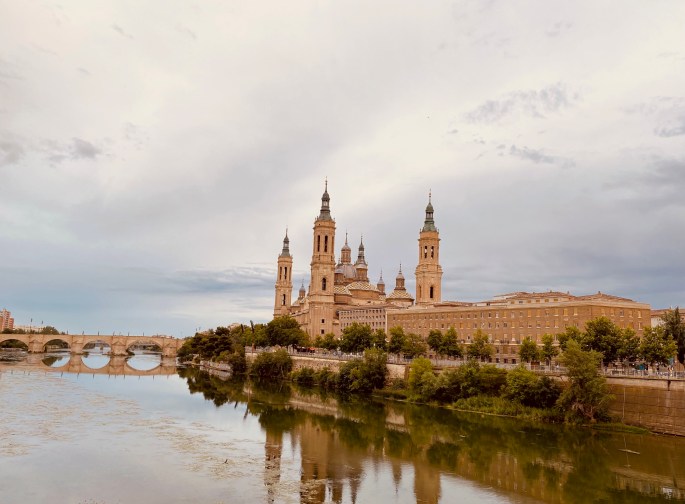
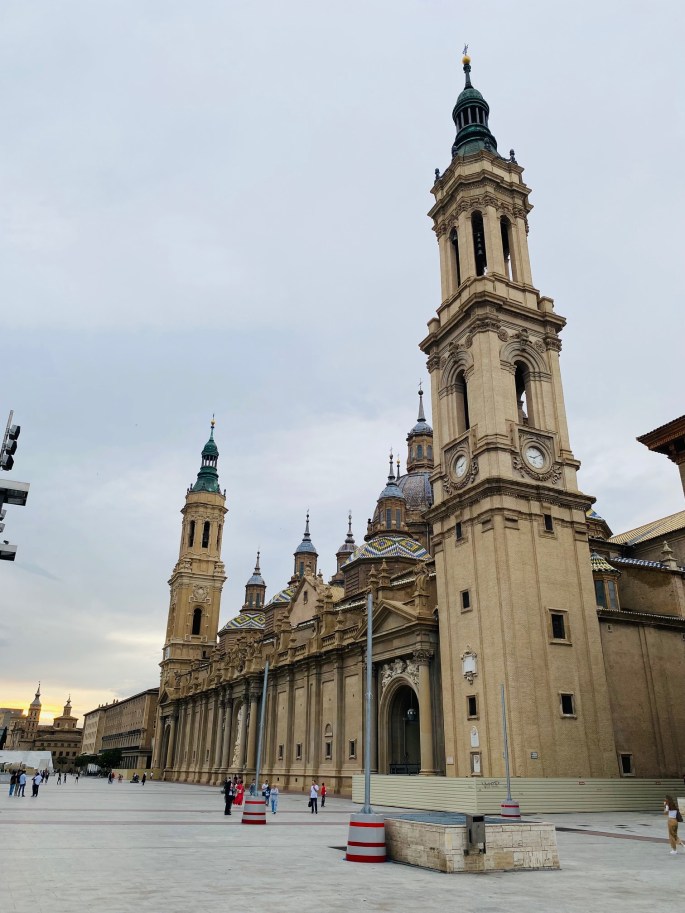
After checking in and parking and unpacking the bike, I take a stroll into Zaragoza’s historic centre. One of Zaragoza’s most iconic landmarks, visible for miles, is its magnificent cathedral, known as the Basilica–Cathedral of Our Lady of the Pillar (Catedral-Basílica de Nuestra Señora del Pilar). This grand edifice stands on the banks of the Ebro River and holds great religious and cultural significance. Legend has it that the Virgin Mary appeared to Saint James the Apostle on a pillar at this site, making it a revered pilgrimage destination for centuries. The cathedral’s architecture is a splendid blend of different styles, with its Baroque exterior and intricate details. Inside, visitors can marvel at its richly adorned chapels, impressive altarpieces, and the revered image of the Virgin Mary on the pillar.
Apart from the cathedral, Zaragoza is home to other notable landmarks. The Aljafería Palace, a fortified Islamic palace dating back to the 11th century, is a testament to the city’s Moorish past. Its intricate architectural details and lush gardens provide a glimpse into the rich cultural heritage of the region. La Seo Cathedral, also known as the Cathedral of San Salvador, is another significant religious site in Zaragoza. Its striking Mudéjar tower and ornate interior make it a must-visit for history and architecture enthusiasts. Additionally, the city is renowned for its grand Plaza del Pilar, a vast public square that encompasses the cathedral and serves as a vibrant gathering place for locals and visitors alike.
Zaragoza’s history and landmarks blend together to create a captivating tapestry of cultures and eras. From its Roman foundations to its Islamic and Christian influences, the city’s heritage is woven into its streets, buildings, and traditions, offering a compelling glimpse into its storied past.
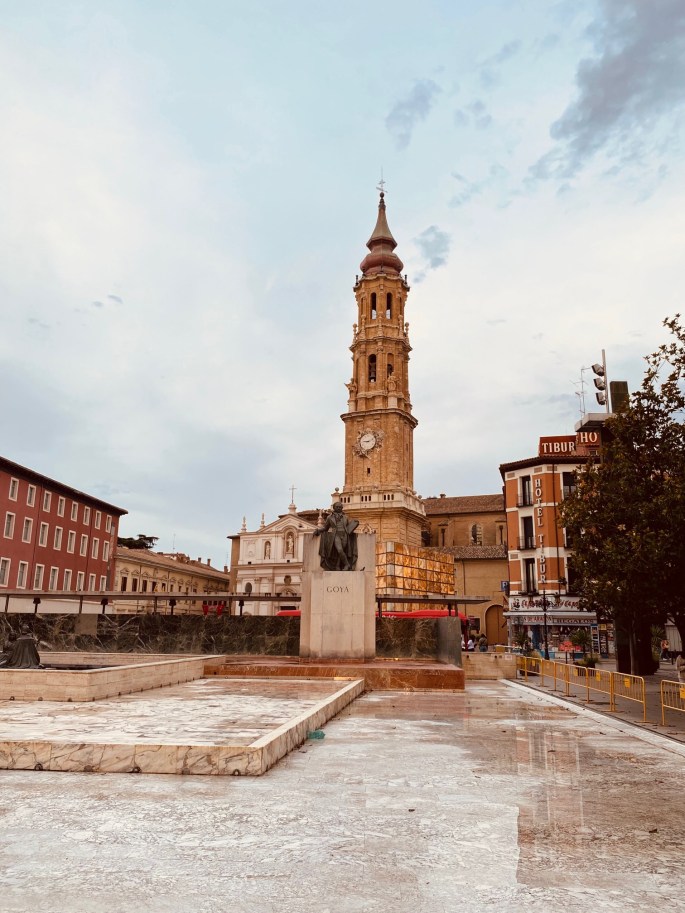
One should also mention Goya. A figure of global historical significance Francisco de Goya, one of the most renowned Spanish painters and printmakers was born in the village of Fuendetodos, near Zaragoza, in 1746. He spent much of his early life in the city and later returned to Zaragoza during various periods of his career.
Goya’s connection with Zaragoza is most notable during the Napoleonic invasion of Spain in the early 19th century. In 1808, during the Peninsular War, Zaragoza became a key battleground between the French army and the Spanish resistance. The city faced a brutal siege, known as the Siege of Zaragoza, which lasted for over two months. Goya, who was appointed court painter by the Spanish monarchy, depicted the horrors and heroism of this siege in a series of powerful artworks, known as “The Disasters of War.” These graphic and emotionally charged prints captured the atrocities and suffering endured by the people of Zaragoza during the siege.
After a satisfying set of visits to Zaragoza’s most iconic landmarks, I walk unhurriedly back to my hotel. Little do I know that a mere few weeks later the boulevard along which I stroll will be swept away by flash floods, people weeping as they hang on to floating cars and debris for dear life, with little hope of rescue.
When I rode around Europe in 2018, my own Phaedrus then, the monster pursuing me throughout my ride, was fascism. In 2023, it’s climate change, but it’ll take another day for that to dawn on me.
 Blac Ridere
One thought on “The Long Ride South (part 4: Zaragoza)”