I roll out of Vitoria-Gasteiz and towards León. The distance to be covered is not too great: I am travelling to Leon to meet with a business contact, Jorge, and have planned my stops to try and arrive in the mid afternoon so as to be able to get my bearings and catch my breath before we meet. He has suggested I take the National Routes instead of the motorway, and having learned what I have on previous trips, obviously I take his suggestion and join one upon leaving the city.
Jorge was right, the National Route is pleasant. I am glad to be following his advice. The Route runs parallel to the motorway for much of the distance, but is picturesque and the ride is relaxed, passing farms, vineyards, woodland, and prairie. I stop for petrol in a village. The guy at the petrol station comes out and we chat about the bike, he is interested and friendly.
I stop once more in a little picnic or rest area, to drink some water and kick my legs and enjoy the quiet ambience interrupted only by some bird song and the chirruping of insects. After the previous day’s challenges, this is a pleasant contrast. A few minutes later I get back on the bike and head in the direction of León.
The history of the Spanish city of León stretches back to ancient Roman times, making it a place with a rich and diverse heritage. The name “León” itself has Roman origins, derived from the Latin word “Legio,” meaning legion. This name is a testament to the city’s foundation as a military encampment for the Legio VI Victrix during the Roman conquest of the Iberian Peninsula. As the centuries passed, León grew in importance and became an essential administrative and commercial centre within the Roman Empire.
Following the decline and eventual fall of the Roman Empire, León came under the control of various Germanic tribes and faced the influence of Visigothic and Moorish forces. However, it was during the Middle Ages that León experienced its golden age. In the 10th century, León became the capital of the Kingdom of León, which played a significant role in the reconquest of the Iberian Peninsula from Moorish rule. The city thrived under the reign of Alfonso III and became a centre of art, culture, and intellectual pursuits. Magnificent buildings and religious structures, such as the iconic León Cathedral, were constructed during this period, leaving behind a remarkable architectural legacy that still captivates visitors to this day.
In the present day, León stands as a city that harmoniously combines its historical legacy with modern developments. It continues to honour and preserve its rich heritage through the meticulous preservation of its architectural gems, including Roman walls, mediaeval palaces, and picturesque streets. León’s cultural scene thrives with festivals, such as Semana Santa (Holy Week), and a renowned Museum of Contemporary Art, attracting visitors from far and wide. The city has also embraced innovation and progress, becoming a hub for technology and education, with esteemed universities and research centres. León’s vibrant atmosphere, blend of history and modernity, and warm hospitality make it an enticing destination for travellers seeking to delve into the captivating story of this remarkable Spanish city.
Since the main reason for my detour to Leon is a business one, and I want to be able to concentrate on the conversation with Jorge, I check into an actual hotel for the first time on the trip. It’s about fifteen minutes’ walk from the centre and supposedly good for business travellers. The reception area is dark and not very welcoming. The receptionist goes through the motions of checking me in, but it seems her mind is elsewhere. I take my gear up to the room and it’s obvious that it’s been cleaned only partially. Regardless, I get out of my motorbike gear and take a shower (thankfully one of the towels turns out to be clean). I change into non armoured jeans and the one casual shirt which I have with me, drink some water and check messages.
Jorge told me that not much happens in the evening until around 9pm. I walk to his apartment in town for 8.30pm. We sit down with water and have a long conversation about business and the challenges the world is facing. We discuss how the company at which I work can solve some of them: by addressing overconsumption through giving people accurate legally enforceable information about the things they own we can prevent a lot of waste. We also talk about solving inefficiencies in the way real estate is bought, sold, and rented, and many other fascinating things. Part way through our conversation Jorge’s wife and two kids arrive: they’ve been away and have just got home. It’s an honour to be introduced to them. Jorge and his wife lived in London for a few years, before the kids were born. I speak to the kids in English with Jorge’s encouragement, it’s an opportunity to practise.
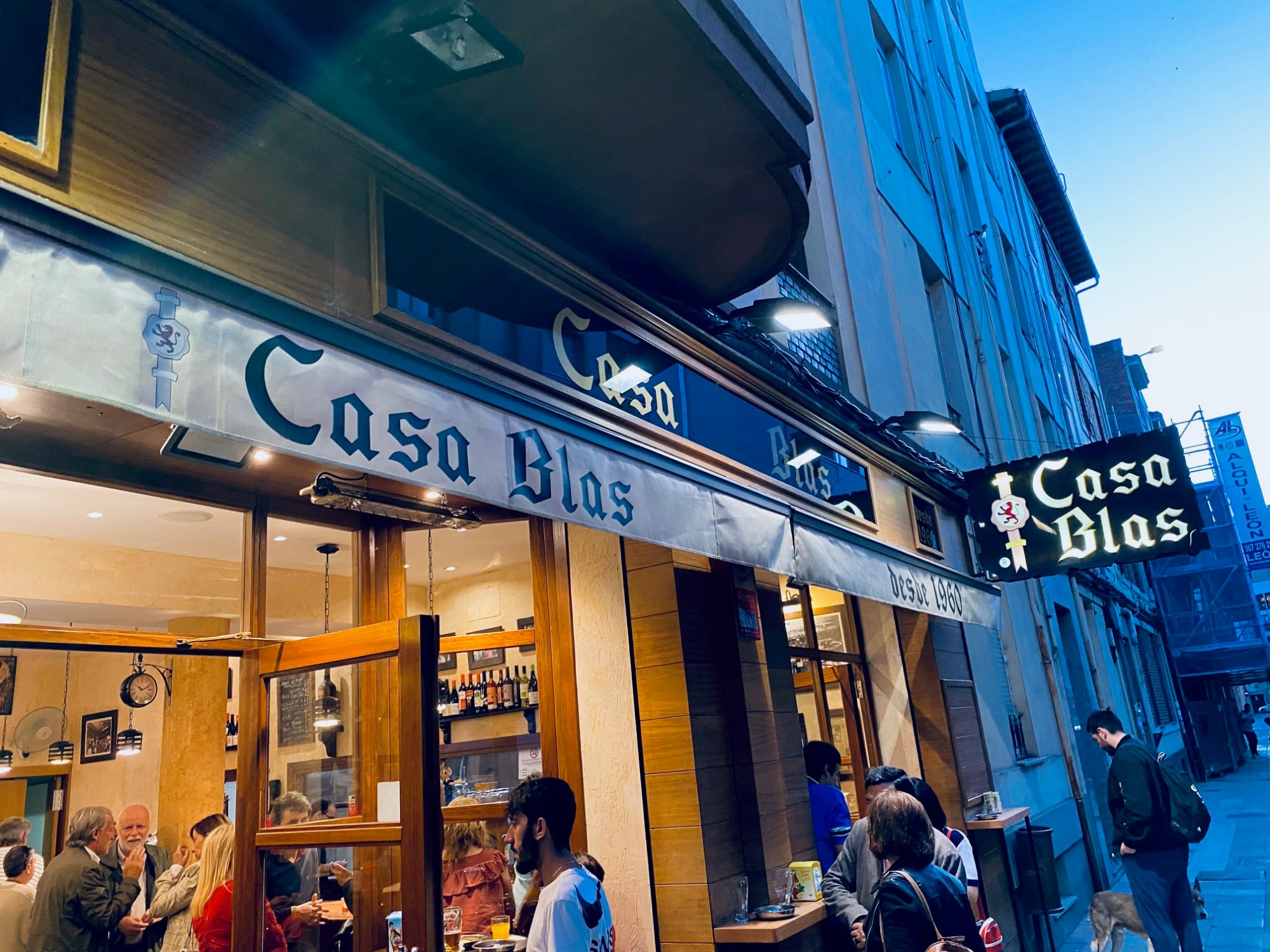
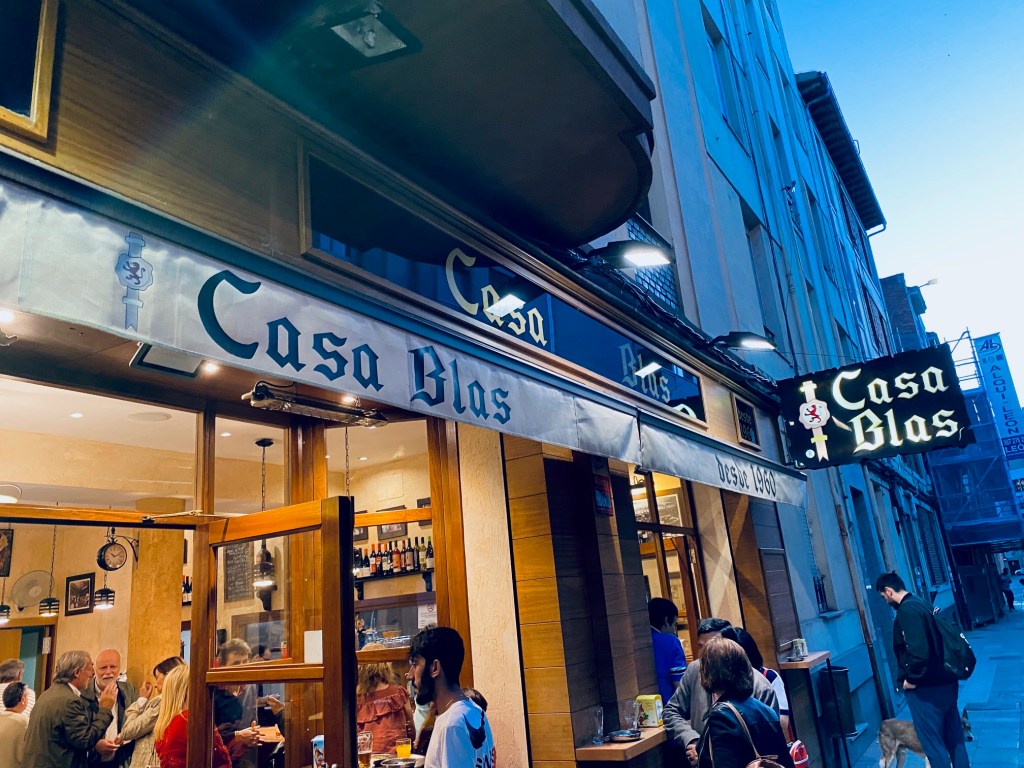
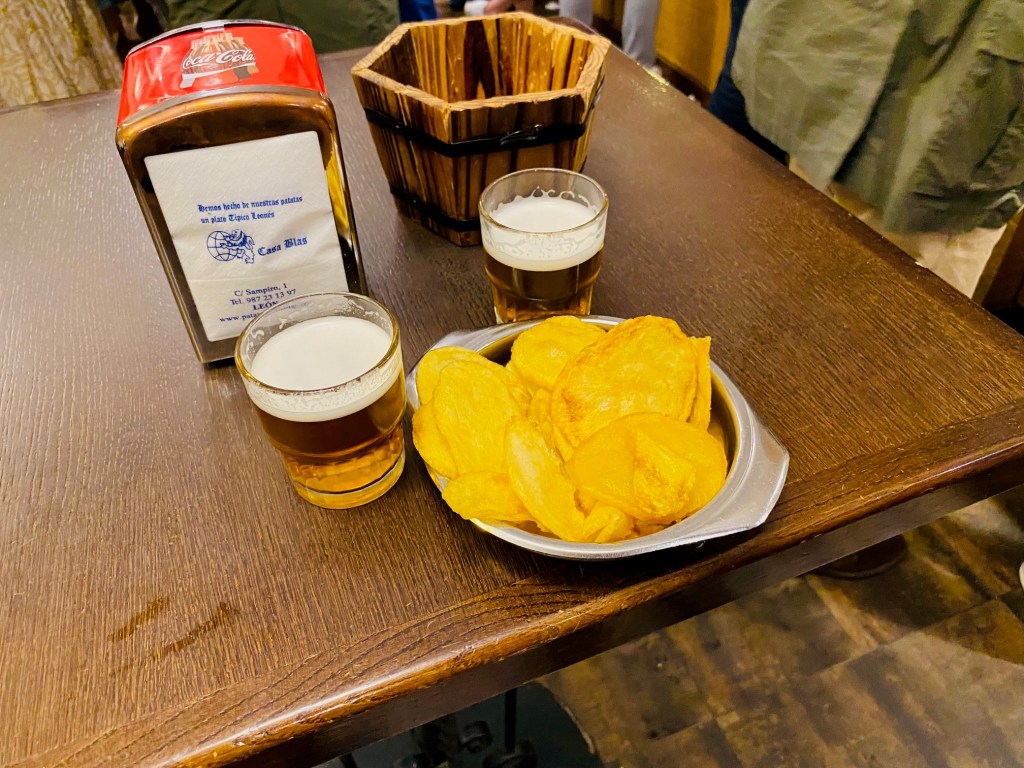
After greeting Jorge’s family, he and I set off and he takes me on a tour of León, pointing out its incredible landmarks, and stopping at several delightful cafes and bars. We start at the world famous decades old Casa Blas, known for its crispy potatoes which are included with drinks. The truth is that this free gift is in fact the star of the show. We order the spicy ones: for a simple dish they are out of this world.
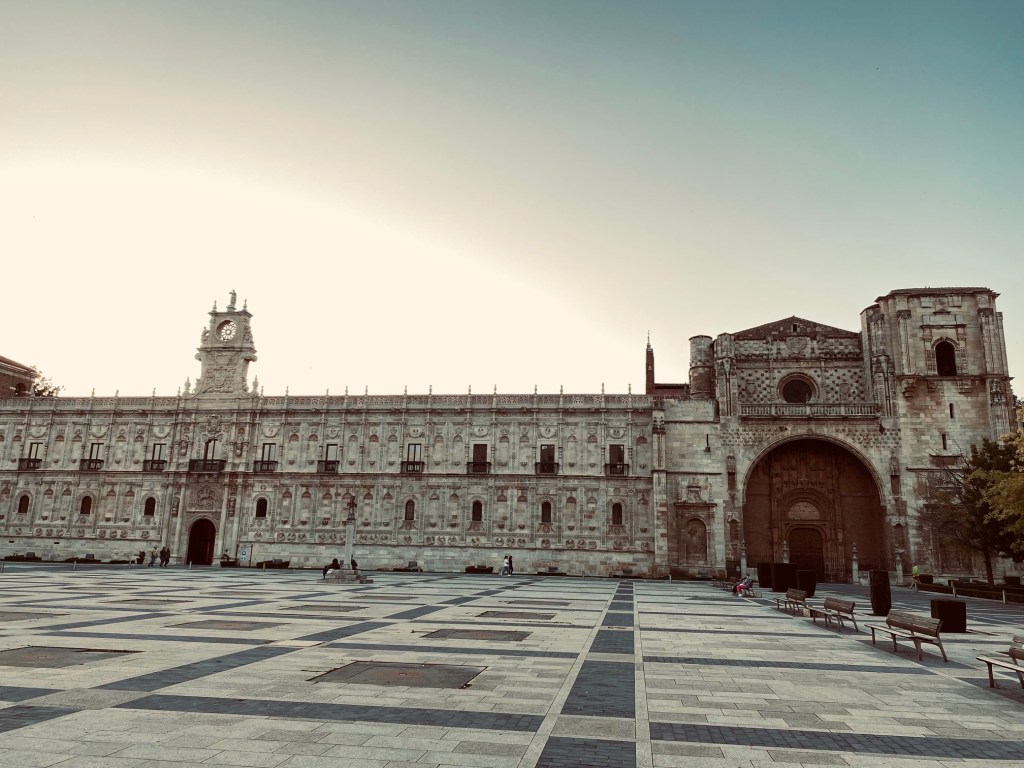
As we continue to walk and talk Jorge tells me that him and his wife have completed the Camino de Santiago pilgrimage, and that León where we are lies along its route.
The Camino de Santiago, also known as the Way of Saint James, is a renowned pilgrimage route that has attracted pilgrims from all over the world for a millennium. Originating in the early Middle Ages, the Camino de Santiago holds deep religious significance. The pilgrimage begins at various starting points across Europe, with the most popular being the French Way (Camino Francés) that commences in Saint-Jean-Pied-de-Port, France. It culminates at the Cathedral of Santiago de Compostela in North-Western Spain, where the remains of Saint James the Apostle are said to be interred.
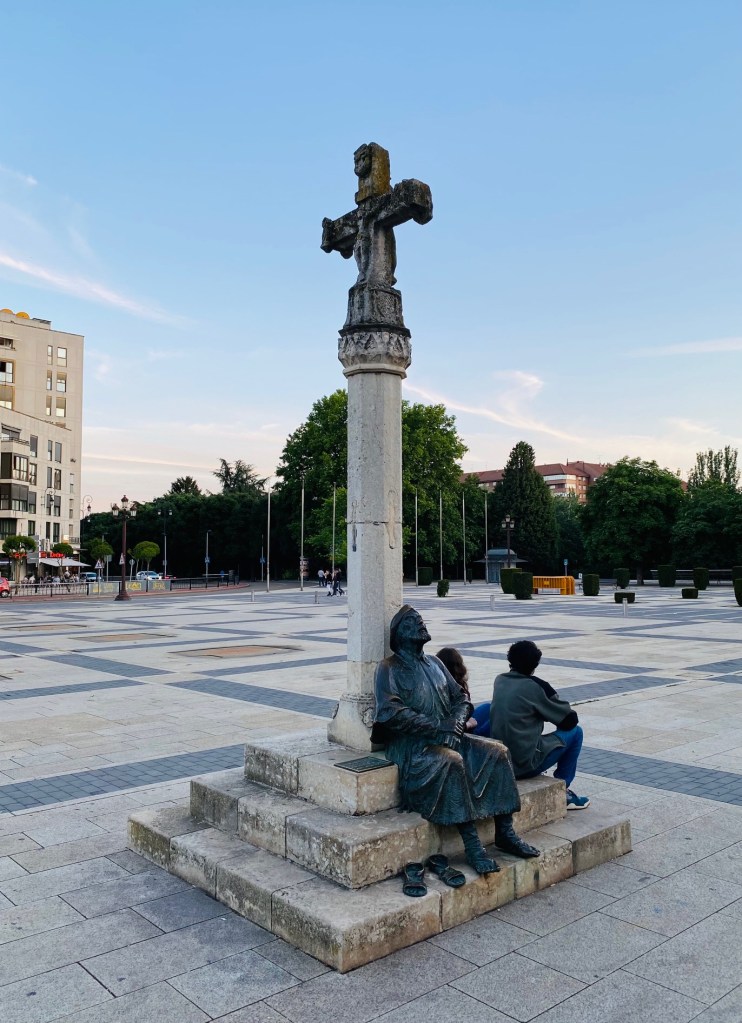
Along the Camino Santiago, pilgrims find accommodation in a variety of places to cater to different needs and budgets. Albergues, or pilgrim hostels, are a common choice for many pilgrims. These communal lodgings provide basic amenities such as bunk beds, shared bathrooms, and kitchen facilities. Albergues offer a unique opportunity for pilgrims to connect and share experiences with fellow travellers from diverse backgrounds. Alternatively, there are also private hostels, guesthouses, hotels, and even monasteries along the route that provide more comfort and privacy for those seeking a different experience.
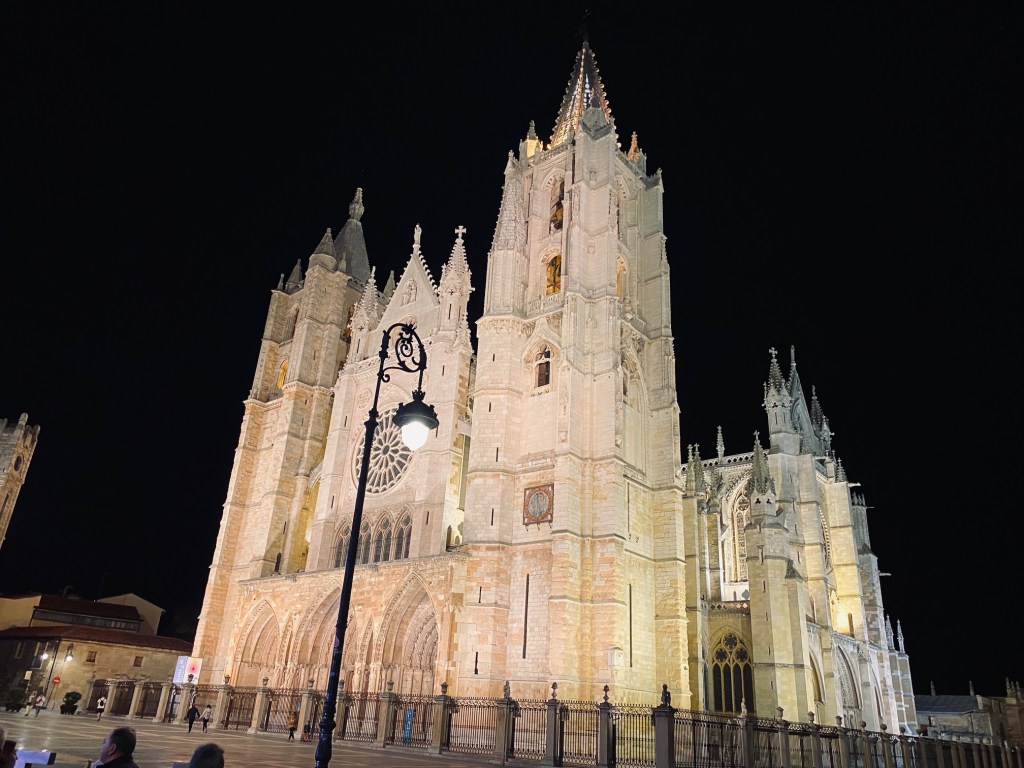
León’s magnificent Gothic cathedral offers pilgrims spiritual solace. The city serves as a significant milestone on the Camino de Santiago, marking the journey’s progress and adding an enriching cultural experience to the pilgrimage.
As we walk and talk, talk and walk, a thought occurs to me: that my own long motorcycle journey is a pilgrimage of sorts, the actual travel being as significant if not more so as the destination. At some point in my past it transpired that meditation was not good for me: it did not help my mental state, instead causing me to focus on problems in an unhelpful and anxious way. It turns out that I am not alone in this and around 10% of the world’s population is in the same boat. My friend and colleague Vinay who is a respected Hindu cleric and meditation teacher introduced me to the concept of karmic yoga instead. Essentially it means that it’s still possible for people like me to seek spiritual and emotional improvement (in rare cases leading to enlightenment), through positive or determined experiential interactions with our environment. The work of the Ted Simon Foundation which encourages long distance motorcycle adventurers to help foster mutual understanding between the communities they visit could well fall into that category. Certainly to me, a long distance ride culminating with a meeting of minds and sometimes souls, is a profound and meaningful experience which helps me to live.
I share these thoughts with Jorge as we walk through the streets of León. He recognises what I am talking about, and tells me that as someone who is fond of driving, he too derives comfort and serenity from long distance road trips. And walking 500 miles for the purpose of completing a pilgrimage isn’t an example of this experiential / spiritual interface too, I don’t know what is.
The night falls and the majestic historical buildings of León are beautifully flood lit. Jorge and I conclude our evening at an outdoor bar in a nice walled square some time after midnight. It’s so rewarding and educational to spend time with someone who really understands culture and history, and how these things interface with the modern world. Jorge walks me back to my hotel, we say our goodbyes and he heads home to his family. I make my way up to my room, lay out my kit for the morning and hit the hay, sleeping soundly in preparation for the long ride to Zaragoza the next day.
 Blac Ridere