This article about a trip to Vietnam last year was originally published in The Road magazine.
———
When I told our tour guide Mr Nguyen of my intention to rent a scooter as a form of transport, he looked me in horror and shook his head. “No, no, no!” he said, “Too dangerous!” 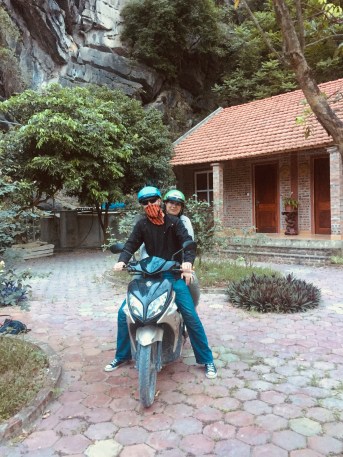 This sentiment wassomething I encountered more than once, so when I was eventually installed on a 135cc Yamaha Nuovo and cruising along a pleasant road weaving between the stunningly beautiful hills of Ninh Binh with the missus on the back I wondered what all the fuss was about.
It’s true that at first glance in the major cities like Hanoi and Ho Chi Minh the wall to wall scooter traffic can seem a bit intimidating and not a little chaotic. Take Ho Chi Minh, formerly known as Saigon, as an example. It’s a giant conurbation of fourteen million inhabitants, not atypical of other megacities in East Asia. There are twelve million scooters and only half a million cars. Most people, of all ages and occupations, own one or more scooters. As a woman we met at the famous Ku Chi tunnels explained, in cities people are a bit wealthier so many of them have one scooter as a daily commuter hack, and a nicer one for outings and to impress their friends. 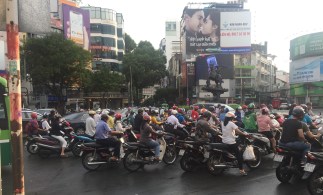 This makes sense to me, and goes to show that bikers are bikers everywhere, it just so happens that in Vietnam we make up 90% of the population, compared to only around 5% of us riding in the UK.
But look beyond the apparent chaos consisting of a swarm of a myriad scooters and one sees not only an order but a fairly logical one. Yes, everyone rides in either direction, with no regard for red lights and both ways around roundabouts. And yet, when one is part of that flow, one does not for a second feel unsafe.  The safety bubble is tiny, perhaps a centimetre or less, but it is there. One goes when there is a gap and one lets others pass when it’s clearly their turn. Eye contact is endemic and one finds oneself telegraphing one’s intention via body language as well as stance. There truly is safety in numbers and despite these numbers being in the millions, there is little evidence of air pollution or congestion: the PTW is king and it clearly works as designed. All road users treat each other with respect. I was not the only non Vietnamese person on a bike: there are large numbers of tourists and expats, mostly French, Chinese and Russian, and of course we are all fairly easy to spot. Nonetheless, Vietnamese riders showed nothing but respect and patience to those who were clearly a little unused to the way things were, and allowed us to learn at our own pace.
 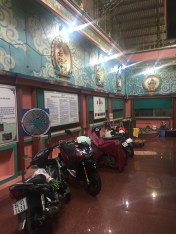 Crime is exceptionally low and no one locks their scooters up overnight, even though I did, to the bemusement of my hosts. The scooter itself cost around the equivalent of £2 per day to hire, with around 50p in fuel which one buys in bottles.
That’s not to say that even a Londoner like me, who battles through violent congested London traffic daily, was not a little taken aback by some of the ways in which scooters are utilised. It’s legal for three people, two adults and a child, to ride on one scooter, but not more than that. 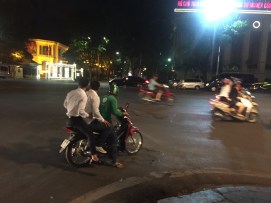 Nonetheless, I saw three adults, and families of four and even five people on one scooter, as well as loads which included an entire cow, and the contents of a whole roadside pop up restaurant: a kitchen as a sidecar, a marquee, a few folding tables and twenty odd chairs plus a large fuel canister and all the ingredients for a day’s cooking, tasty street food for hundreds of punters. All that on a Honda C90.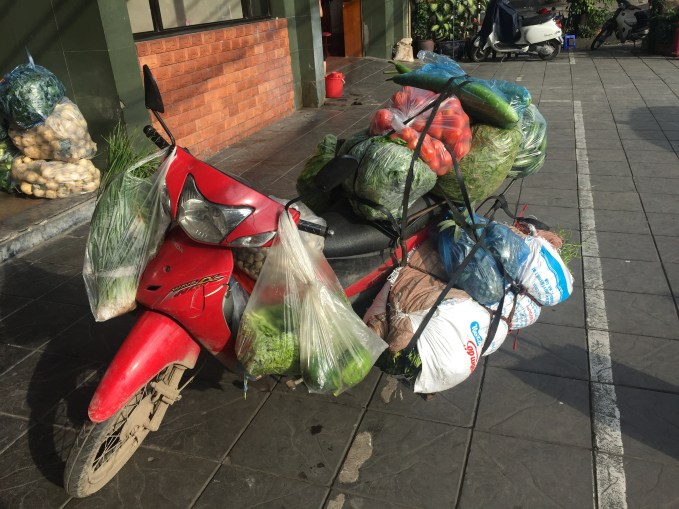
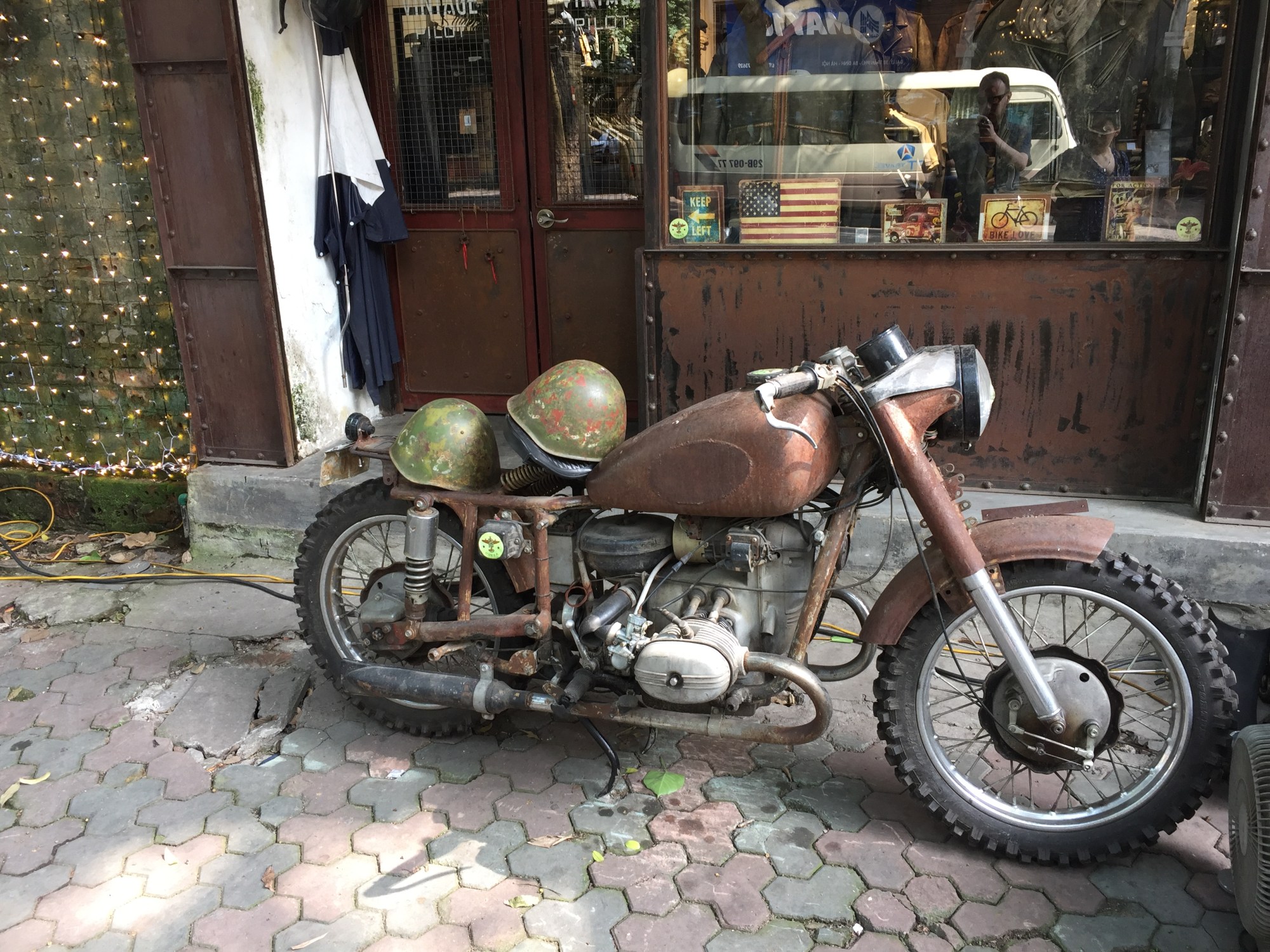
Scooter and motorcycle culture is everywhere. As well as modern and less modern scooters, one occasionally sees vintage Soviet and American bikes, the latter abandoned by the retreating US army in the 70s along with other military equipment. Echoes of war are visible in other ways. Even three or four generations on, many people are born with disabilities due to the use of Agent Orange during the war. 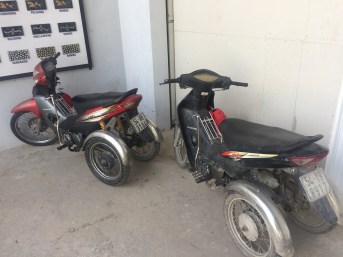 Disability does not mean immobility in Vietnam, and one sees a lot of adapted scooter trikes. This is indicative of Vietnamese social attitudes of seeking ways to enable and empower. And as we bikers know, a motorbike or scooter goes a long to ensuring this aspect of an individual’s liberation.
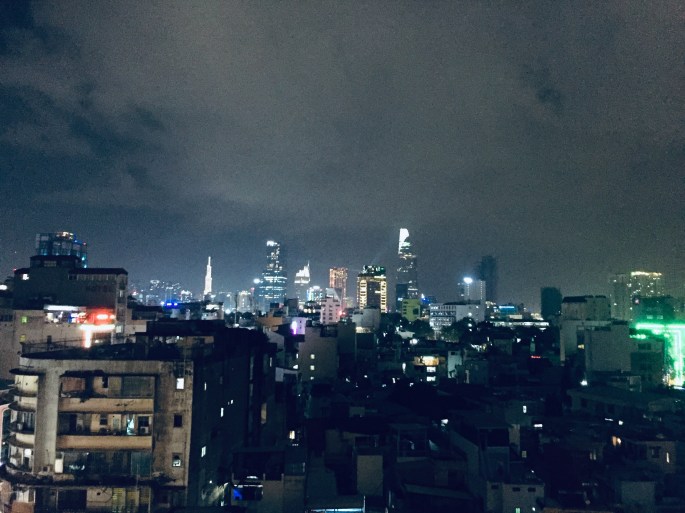
Anyone who would like to visit that fascinating and beautiful country with its often tragic past would do well to purchase a guidebook or read some blogs to decide on an itinerary. There aren’t “biker” places in the sense that every place is a biker place as everyone, from bank workers to chefs, rides. Hopping off a scooter and enjoying a Hanoi coffee (with sugar and an egg stirred into it) is a must: the only thing which rivals Vietnam’s scooter culture is its coffee culture! Pho (noodles in a steaming hot broth) is a ubiquitous and delicious breakfast dish, and you could do a lot worse than a fresh Cha Ca (fish which you cook yourself with fresh herbs in a mini gas wok installed on the table) for dinner. 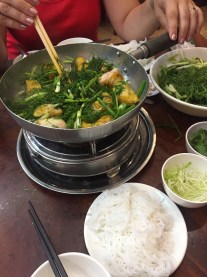 Hanoi has old world charm, areas like Ninh Binh or Ha Long offer stunning natural beauty, Ho Chi Minh City is busy and cosmopolitan, with swanky rooftop bars as well as sombre war memorials and museums. Everyone will find their Vietnam. In my case, riding a scooter, eating pho for breakfast at 7am and stopping for coffee at small street scooter carts helped me to see, even in a small way, the world through the eyes of the people of Vietnam who were such wonderful hosts. As I never tire of saying, one sees the world differently from the seat of a motorbike.
 Blac Ridere